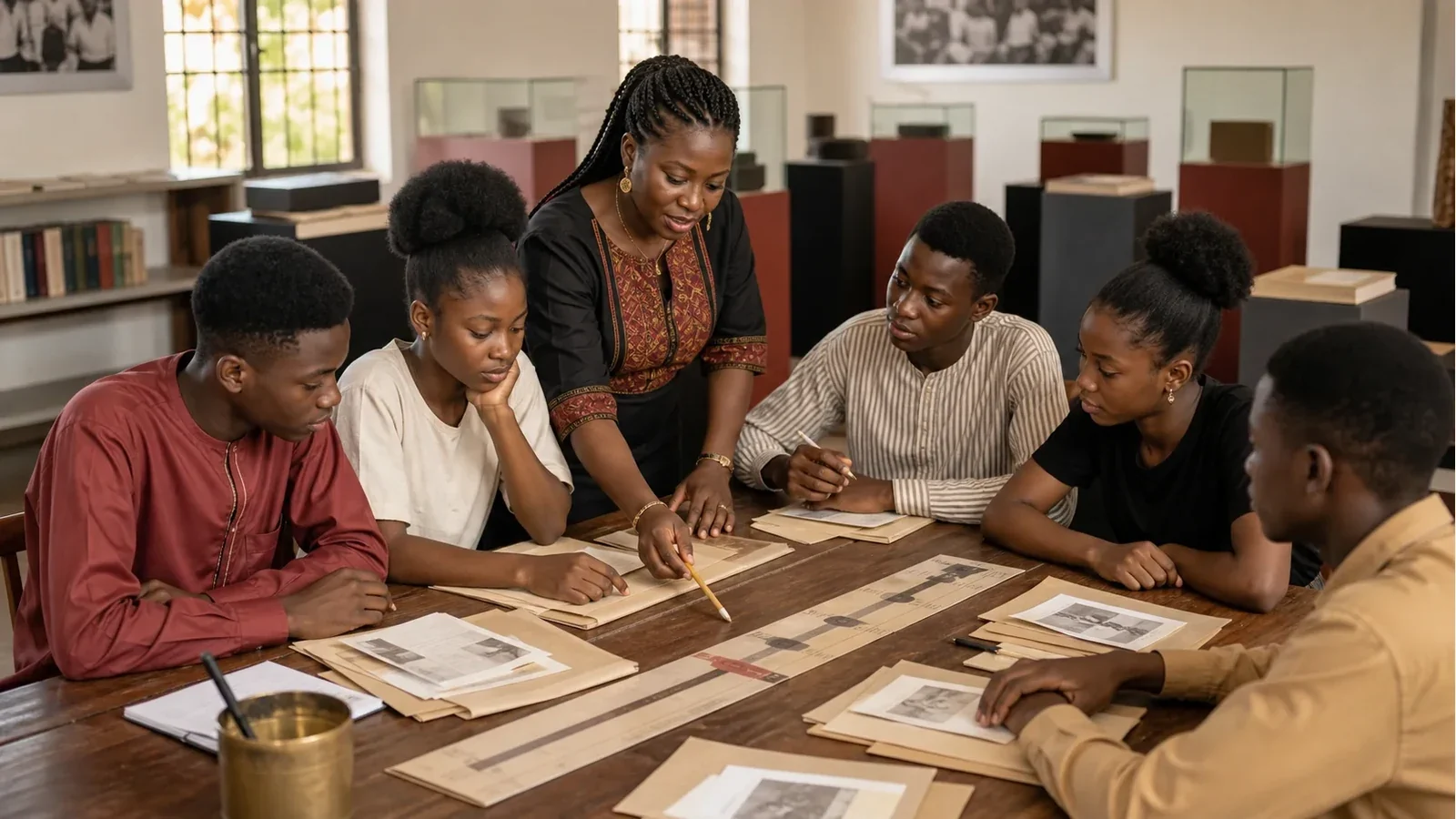
This guide is part of the Reclaim Your DNA research library. It helps readers understand Nigerian heritage, the Benin Bronzes, the 1897 looting of Benin City, and the modern movement for cultural restitution through context, evidence and a concrete path to action.
Start with the campaign story, then use this guide as a reader's checklist for every restitution announcement. It connects naturally to our guides on reading museum object records, public access after return, teaching the Benin Bronzes, the wider research library, and the petition.
Why restitution needs a tracker, not only a headline
Benin Bronzes restitution is now a moving field of legal transfers, physical handovers, long-term loans, digital catalogues, conservation planning and public education. A headline may say that a museum returned objects to Nigeria, but the practical reality can be more layered. Ownership may transfer before the objects travel. Some works may remain abroad on Nigerian-approved loan. A public database may improve access without changing title. A claim may be accepted by one institution while another still describes itself as researching provenance.
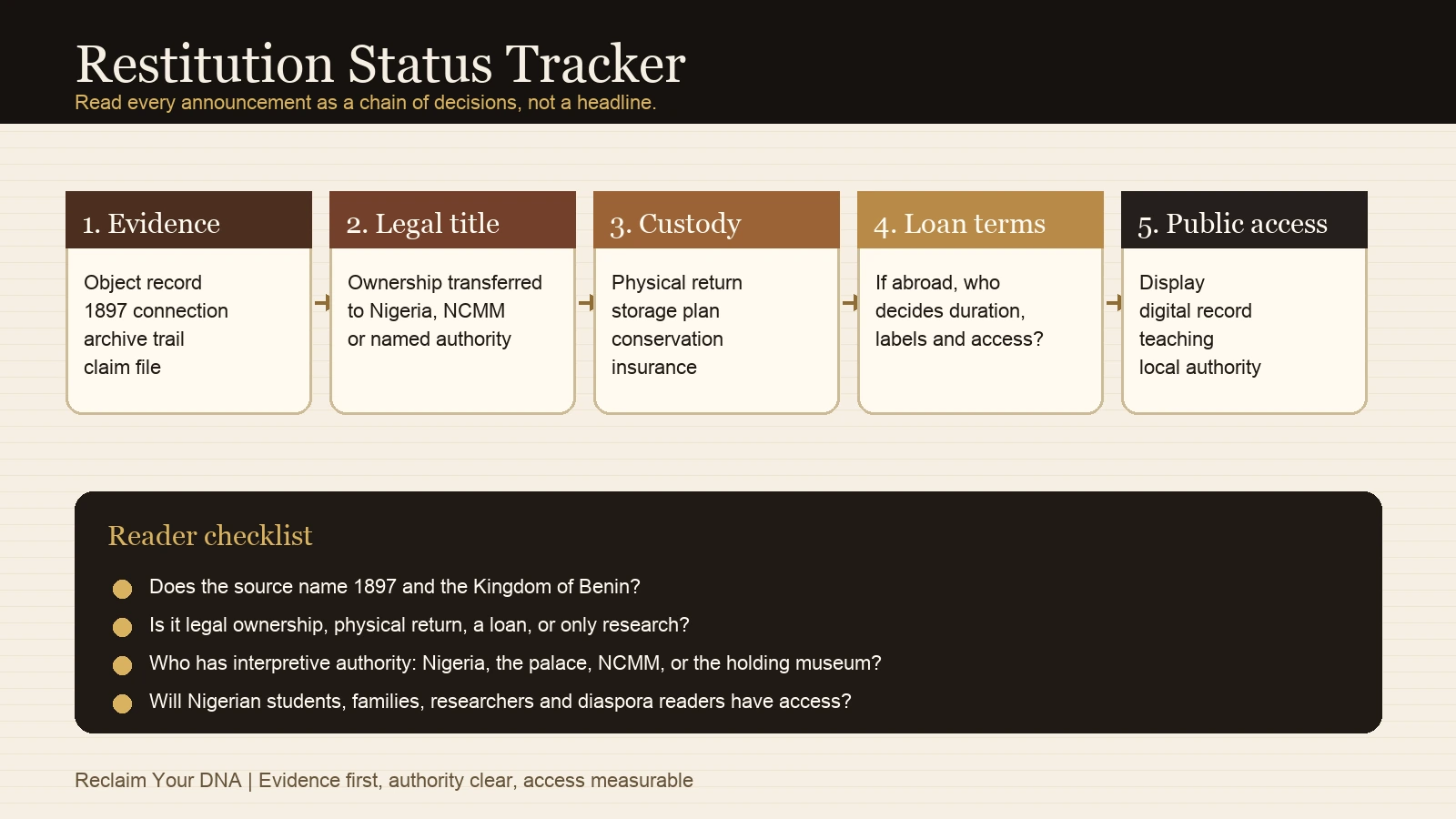
Readers therefore need a tracker, not only a reaction. The goal is not to reduce restitution to bureaucracy. It is to make public accountability more exact. When an institution announces a return, the public should know what changed, who now has authority, where the objects are, whether the 1897 history is named, how Nigerian institutions are involved, and whether students, families, researchers and diaspora communities will be able to learn from the outcome.
This matters because the Benin Bronzes are not ordinary museum assets. They include plaques, commemorative heads, regalia, figures and other court objects created within the Kingdom of Benin, many connected to the Oba, royal ritual, ancestral memory and Edo artistic systems. The British Museum's own public history names the 1897 occupation, burning, looting and dispersal of palace objects. A serious tracker keeps that source event visible while following the modern chain of repair.
Begin with the evidence record
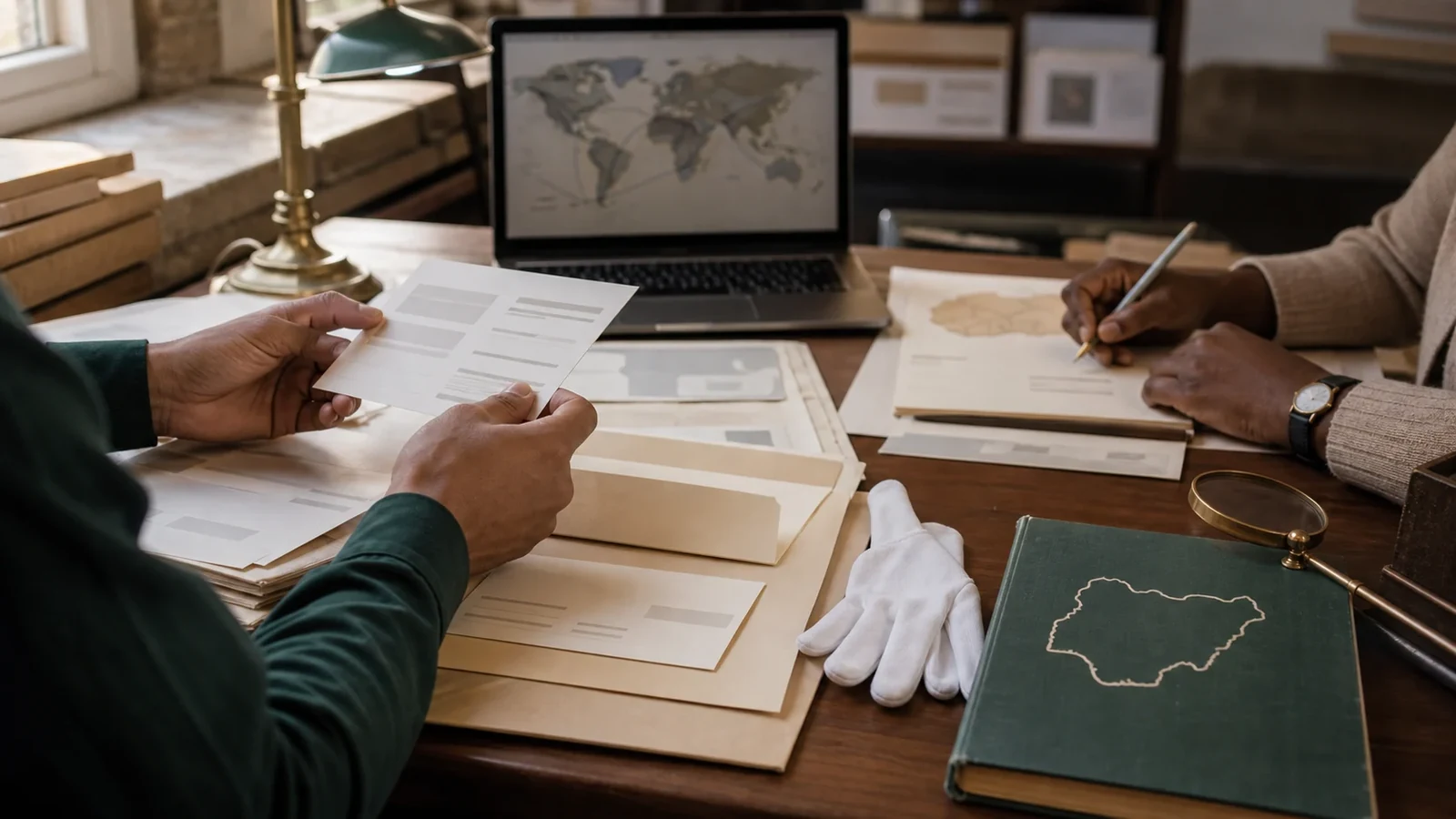
The first question is evidence. Does the announcement connect the object to the Kingdom of Benin, Benin City, the royal palace, the 1897 British expedition, a named collector, an auction route, a donor, or an accession record? Digital Benin is useful here because it links object data, images, provenance names, archival documents, maps, Edo designations and contextual learning. As of the current platform, it connects data for more than five thousand objects across institutions in multiple countries.
Evidence should not be treated as a delay tactic. Provenance research is necessary when it clarifies what happened, identifies a rightful claim, and supports return. It becomes ethically weak when research is used to keep the public in permanent suspense despite a well-documented 1897 connection. A tracker should therefore record the evidence status in plain language: documented 1897 removal, likely 1897 removal, unclear route, or outside the 1897 category but still related to Benin history.
Readers can learn a lot from small wording differences. A museum may say an object was acquired in 1902, purchased from a dealer, donated by a colonial officer, or entered the collection after the punitive expedition. Those words are not interchangeable. The administrative acquisition date may be later than the violent removal. A strong public note explains both: the museum transaction and the original coercive event that made the transaction possible.
Separate legal title from physical return
The second question is legal title. Has ownership actually moved to Nigeria, the National Commission for Museums and Monuments, another Nigerian public authority, or an agreed traditional authority? This is the most important distinction that many public debates blur. An object can be physically displayed in a foreign museum while no longer being owned by that museum. Conversely, a foreign museum may discuss collaboration and access while retaining legal ownership.
Cambridge provides a clear recent example. In February 2026 the University of Cambridge announced that it had transferred legal ownership of 116 Benin artefacts in the Museum of Archaeology and Anthropology collection to Nigeria's National Commission for Museums and Monuments, under a management agreement with the Benin Royal Palace. The same announcement said that physical transfer of most artefacts would be arranged later, while seventeen pieces would remain on loan and display for an initial three years.
That structure is not the same as no return. It is also not the same as a simple shipment. It is a legal transfer followed by custody arrangements. A tracker should therefore use separate columns for title and location. If title has moved, say so. If physical return is pending, say so. If some objects remain abroad on loan, record the loan period and who approved it. Precision prevents both institutional self-congratulation and public confusion.
Track physical custody and storage
The third question is custody. Where are the objects now, and where will they be held next? Custody includes shipping, insurance, condition reports, conservation assessment, secure storage, climate control, exhibition planning and staff responsibility. These details may sound technical, but they determine whether restitution becomes a durable public good or only a symbolic ceremony. The return of cultural property is a moral act, but it also requires careful museum work.
The Netherlands case shows why custody should be tracked separately. The Dutch government announced that 119 Benin Bronzes were returning to Nigeria in June 2025, described the return as unconditional, and said the Nigerian government would decide how and where the works would be displayed. It also stated that the objects would initially be stored in the new NCMM Oba Ovonramwen storage facility at the National Museum in Benin City, while four items would remain on display in the Wereldmuseum under a loan agreement.
A custody tracker should avoid insulting assumptions about Nigerian capacity. It should ask the same professional questions it would ask any institution: who is responsible, what is the storage plan, how will objects be conserved, how will they be documented, and how will public access be staged? The answer should be Nigerian-led. International partners can support conservation and training, but custody should not become a back door for continued foreign control.
Read loans as agreements, not loopholes
The fourth question is loans. A loan can be legitimate when ownership has moved and the Nigerian authority decides that an object should remain temporarily abroad for display, research, education or diplomacy. A loan becomes suspect when it is used to avoid transfer of title, to preserve old interpretive power, or to make restitution look like generosity from the former holder rather than recognition of rightful authority.
Berlin is a useful case for careful reading. In 2022 the Staatliche Museen zu Berlin announced a contract transferring ownership of 512 Benin objects from the Ethnologisches Museum to Nigeria. Around a third of the transferred objects were to remain in Berlin on loan for an initial ten-year period and display in the Humboldt Forum, with Nigerian involvement in interpretation and education. That is a complex arrangement, not a simple keep-or-return binary.
A public tracker should record the loan's source of authority. Was the loan agreed after Nigerian ownership was recognized? Is the loan period defined? Are labels updated to state Nigerian ownership? Are Nigerian partners involved in interpretation? Will digital records show the new title status? These details help readers distinguish a negotiated post-return display from a museum using partnership language to preserve an old possession claim.
Watch for the difference between return, transfer and research
Institutions use many verbs: return, restitute, transfer, deaccession, repatriate, loan, display, research, digitize, collaborate. Each word has consequences. Transfer usually points to legal title. Physical return points to movement. Deaccession is an internal museum step before transfer. Digitization supports access but does not itself change ownership. Collaboration can be valuable, but it should not be allowed to replace restitution when the evidence supports a claim.
The Smithsonian's 2022 announcement is direct on title. It says the National Museum of African Art transferred ownership of 29 Benin bronzes to Nigeria's National Commission for Museums and Monuments, and it identifies the objects as stolen during the 1897 British raid on Benin City. It also connects the decision to an ethical returns policy. That is the kind of language a tracker should capture because it states the ethical basis and the legal action together.
Other records may be less complete. Some museum pages describe contested collections, acknowledge 1897, and state that discussions continue. That information is still useful, but it should not be scored as a return. A tracker can list it as acknowledgement or dialogue. This approach respects institutional facts while keeping the campaign's standard clear: evidence plus authority plus access is stronger than acknowledgement alone.
Add digital access without confusing it with restitution
Digital access is one of the most useful tools for public education. Digital Benin lets readers search and compare records across institutions, study provenance names, explore maps, access archival material and listen to oral histories. The National Commission for Museums and Monuments also points visitors toward a Nigerian digital museum platform, showing that digital presentation is becoming part of Nigerian museum access as well as global research.
But digital access is not a substitute for return. A high-resolution image can help a student learn, a diaspora reader understand, or a researcher compare records. It cannot by itself repair the displacement of authority caused by colonial looting. A database may make the object visible, but it does not automatically give Nigeria legal title, physical custody, interpretive control or the right to decide where and how the object circulates.
The best tracker gives digital access its own field. Record whether the object has a public image, an object record, a provenance note, Edo-language material, a collection history and a current ownership statement. Then record title, custody and access separately. This prevents a common rhetorical shortcut in which online visibility is treated as enough. Digital records should support restitution, not dilute the claim for it.
Follow Nigerian authority and local public access
The central question is not whether global audiences can still see Benin objects. The central question is who has authority to decide. Nigerian public institutions, the Benin Royal Palace, relevant government bodies, Edo cultural stakeholders, educators and communities should shape the future of returned heritage. Foreign museums can be partners, but they should no longer be the default voice for objects taken through the 1897 attack on Benin City.
Public access should also be concrete. Will returned works be displayed in Lagos, Benin City or another Nigerian museum? Will students have guided learning resources? Will object records be searchable? Will diaspora groups be able to use reliable source packets? Will labels be available in language that centers Edo and Nigerian interpretation? Will contemporary Nigerian artists, researchers and educators be part of the public program?
This is why Reclaim Your DNA connects restitution to education and action. A return that sits silently in storage is still better than foreign possession, because authority has moved. But the public value grows when people can learn from the objects, teach the history, and see Nigerian stewardship in practice. Restitution should repair title and restore a relationship between heritage, place and people.
Build a simple public tracker for each institution
A useful tracker can be simple. Create one row per institution and one column for each status: object count, evidence link, 1897 language, claim status, legal title, physical location, loan terms, digital record, Nigerian authority, public access plan and next question. Use official announcements first, then museum collection pages, Digital Benin records and Nigerian institutional statements. Avoid social media claims unless they point to a primary source.
For example, the Netherlands row would note 119 objects, unconditional return, Nigerian government decision authority, NCMM involvement, National Museum in Lagos handover, initial storage in the NCMM Oba Ovonramwen facility, and four objects remaining on loan in the Wereldmuseum. Cambridge would record 116 objects, legal ownership transferred in 2026, most physical transfers pending, and seventeen objects remaining on loan for three years in the first instance.
The Swiss row should be split by institution. University of Zurich announced that 14 objects from its Ethnographic Museum would return to Nigeria, with provenance research showing most were very likely looted before acquisition. Its announcement also describes joint restitution with Museum Rietberg and the Musee d'ethnographie de Geneve through the Benin Initiative Switzerland. A tracker should capture that collaboration while still preserving institution-level details.
Practical takeaways for readers, teachers and diaspora groups
First, read beyond the headline. A return announcement can contain several different actions at once: a legal transfer, a future shipment, a loan, a new label, a digital record and a public program. Second, ask who now owns the object. Third, ask where it is physically located. Fourth, ask who wrote the interpretation. Fifth, ask whether Nigerian students, families, researchers and diaspora communities can access the knowledge in practical ways.
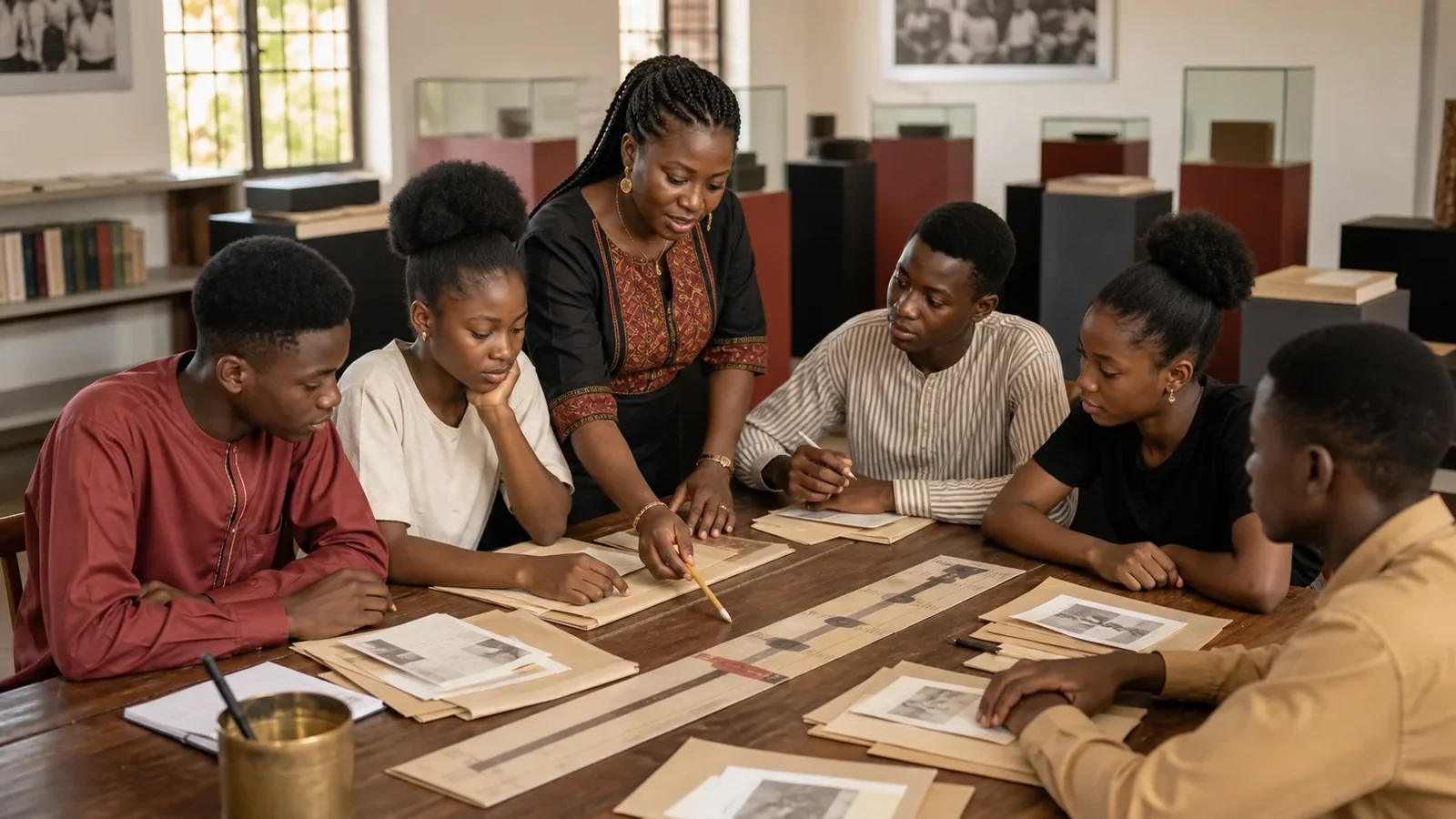
Teachers can turn this into a classroom exercise. Give students three official announcements and ask them to mark evidence, title, custody, loan and access. A museum object record can be compared with a government handover statement. A Digital Benin page can be compared with a museum's own contested-objects page. Students will quickly see that restitution is not a single word. It is a chain of responsibilities.
Diaspora groups can use the same method for public pressure. Instead of asking only why a museum has not returned everything, ask exact questions: has title moved, what claim is pending, what evidence remains unresolved, what is the timeline for physical transfer, who approved any loan, and will labels state Nigerian ownership? Accurate questions are harder to dismiss. They turn moral clarity into civic literacy.
What a good restitution announcement should include
A strong announcement should name the Kingdom of Benin, Benin City, the 1897 British attack or expedition, the route into the institution, the claimant, the legal action taken, the custody plan, any loan terms, and the public access plan. It should distinguish between objects already physically returned and objects that have had title transferred but remain abroad temporarily. It should name Nigerian authority without burying it in partnership language.
It should also avoid the passive voice where possible. Objects were not merely dispersed by history. Many were looted during a colonial military attack, sold through markets, acquired by institutions, and held for generations. When an institution uses accurate language, it helps the public understand why restitution is not a favor. It is a response to a documented chain of violence, possession and delayed repair.
Finally, a good announcement should point forward. How will the public learn from this return? What will happen to object records? Will Nigerian museums, scholars and educators lead interpretation? Will the institution update labels and databases? Will the diaspora be able to track progress? These questions keep restitution connected to living cultural memory rather than reducing it to a press release.
The campaign standard: evidence first, authority clear, access measurable
Reclaim Your DNA's practical standard is simple: evidence first, authority clear, access measurable. Evidence first means that public claims should be sourced, not inflated. Authority clear means legal and interpretive power should be named, not hidden behind vague collaboration. Access measurable means readers should know whether people can see, study, teach and understand the returned heritage in ways that strengthen Nigerian cultural memory.
This standard protects the campaign from two mistakes. One mistake is accepting every positive headline as full repair. Another is dismissing partial progress because it is imperfect. A legal title transfer with a defined Nigerian-approved loan can be real progress. A digital catalogue can be real access. A physical handover can be historic. Each should be valued accurately, then followed with the next necessary question.
The Benin Bronzes restitution movement is entering a documentation era. Returns will continue institution by institution, agreement by agreement, record by record. The public role is to keep the facts visible, support Nigerian authority, teach the history accurately and sustain pressure where institutions remain vague. That is how cultural memory moves from outrage to organized repair.
Frequently Asked Questions
What is a Benin Bronzes restitution tracker?
It is a simple source-backed way to record evidence, legal title, physical custody, loan terms, digital records and public access for each institution or return announcement.
Is legal title the same as physical return?
No. Legal title means ownership has moved. Physical return means the object has travelled or will travel to the receiving authority. Some objects may remain abroad on Nigerian-approved loan after title transfer.
Does digital access replace restitution?
No. Digital access supports learning and research, but it does not replace Nigerian ownership, custody, authority or public access in Nigeria.
How can diaspora groups use this guide?
They can compare official sources, ask precise questions, teach the difference between title and custody, and support the petition with accurate public education.
References and Further Reading
- Digital Benin
- British Museum: Benin Bronzes
- Smithsonian: return of 29 Benin Bronzes
- Government of the Netherlands: 119 Benin Bronzes returning home
- NCMM: Netherlands returns 119 Benin Bronzes to Nigeria
- University of Cambridge: legal ownership of 116 Benin artefacts transferred
- University of Zurich: UZH returns Benin Bronzes to Nigeria
- Staatliche Museen zu Berlin: Benin artefacts now in Nigerian hands
- Horniman Museum: return ownership of Benin bronzes
- National Commission for Museums and Monuments
- UNESCO: 1970 Convention