This guide is part of the Reclaim Your DNA research library. It helps readers understand Nigerian heritage, the Benin Bronzes, the 1897 looting of Benin City, and the modern movement for cultural restitution through context, evidence and a concrete path to action.
Nigeria's digital museum should not be treated as a decorative technology story. The watch-selected NCMM item points to a larger public question: when cultural heritage moves online, does it strengthen Nigerian authority and public learning, or does it merely create a polished screen between people and objects? The evidence available from IHS Towers, Nigeria's federal information ministry and later IHS reporting shows a project that began as a public-private partnership and then became a launched digital access platform tied to the National Commission for Museums and Monuments.
The useful way to read the record is precise and practical. A digital museum can widen access, support education, help researchers locate records and give diaspora audiences a starting point. It cannot, by itself, transfer title, settle a restitution claim, prove provenance or replace physical public access in Nigeria. That distinction matters for readers who already follow Reclaim Your DNA guides on Nigerian museum public records after Benin Bronzes return and Digital Benin provenance research. The new article is therefore a create, not an update: it focuses on Nigeria's own digital museum as access infrastructure rather than on a single restitution transfer or an object-record method.
Reader question and context
The central reader question is simple: what should Nigerians, Edo communities, students, teachers and diaspora families expect from the NCMM digital museum? The IHS Towers partnership announcement was published on 21 November 2024 and described a strategic partnership between IHS Nigeria, NCMM and the Federal Ministry of Art, Culture, and the Creative Economy to support the digitisation of Nigeria's cultural heritage. The stated aim was to make historical artefacts, artworks and cultural monuments more accessible through a digital museum.
That wording matters because it frames the digital museum as access, preservation and education, not as restitution in itself. A reader should welcome easier access while still asking harder questions: who selects the objects, what metadata is shown, how provenance is explained, whether communities can contest records, and how online access connects back to physical museums, schools and Nigerian public interpretation.
This is also why the topic is not a second headline for an existing Reclaim Your DNA page. The existing guide to public access after return asks what happens once title or custody changes. This article starts earlier in the chain. It asks how a Nigerian digital museum can make heritage records visible before, during and after restitution processes, while avoiding the mistake of treating a digital image as a substitute for return.
Verified historical and sector background
The launch record gives the project a clearer timeline. Nigeria's Federal Ministry of Information and National Orientation reported that Hannatu Musa Musawa, Minister of Art, Culture, Tourism and Creative Economy, launched the NCMM Digital Museum in Lagos on 15 August 2025. The ministry's launch notice describes the platform as a first-of-its-kind National Digital Museum and says it offers interactive exhibitions, multimedia storytelling and virtual tours across Nigeria's diverse heritage.
The same notice identifies the institutional actors visible at launch: IHS Nigeria executives, Minister Hannatu Musa Musawa and NCMM Director-General Olugbile Holloway. Those names are not incidental. They show that the digital museum sits at the intersection of a federal cultural agency, a federal ministry and a private infrastructure sponsor. For readers, that means the platform should be judged both as cultural policy and as public digital infrastructure.
A later IHS Towers release on 11 April 2026 connects the digital work to physical museum improvement. It says IHS Nigeria partnered with NCMM to renovate and upgrade the National Museum, Lagos, including the main gallery, display and lighting systems, air-conditioning, a solar inverter system and surveillance cameras. It also states that the renovation followed IHS Nigeria's sponsorship of efforts to digitise cultural heritage and launch Nigeria's first digital museum of antiquities at museum.ng.
That sequence is important. Digital access and physical museum care should not be rivals. If they are aligned, a digital platform can guide people toward collections, records and learning resources, while better physical conditions support conservation, display and local visitation. If they are separated, the public may get attractive online thumbnails while the deeper questions of conservation, interpretation, governance and local access remain unresolved.
Evidence and examples from the launch record
The strongest verified claim is not a number of objects or a promise of completeness. It is the existence of a formal partnership and a launch pathway: IHS Nigeria, NCMM and the federal ministry announced a digitisation partnership in November 2024; the government later announced a launch in August 2025; and IHS described a related physical museum upgrade in April 2026. Together, those sources show continuity from announcement to public platform and museum infrastructure.
The article deliberately avoids claiming that the digital museum is complete, that every item has full provenance, or that online access changes legal status. None of the reliable sources reviewed supports those claims. The fair reading is more modest and more useful: Nigeria has a national digital heritage project that can improve public visibility if its records are clear, searchable, regularly maintained and connected to education.
Professional museum ethics support that caution. The ICOM Code of Ethics page presents the code as a reference text for museum professionals and says it covers acquisition procedures, legislation, resource management, security, returns and restitutions, as well as due diligence and provenance. In practical terms, digital display should not float above those responsibilities. If an object has contested acquisition history, a digital museum record should help explain the issue rather than smoothing it away.
UNESCO's Return and Restitution Intergovernmental Committee page makes a related distinction at international level. It explains that the committee facilitates bilateral negotiations and promotes cooperation for return and restitution, but does not have legal power to decide cases. That distinction is useful for digital heritage too. A platform can inform, connect and document; decision authority still sits in laws, agreements, institutions and negotiations.
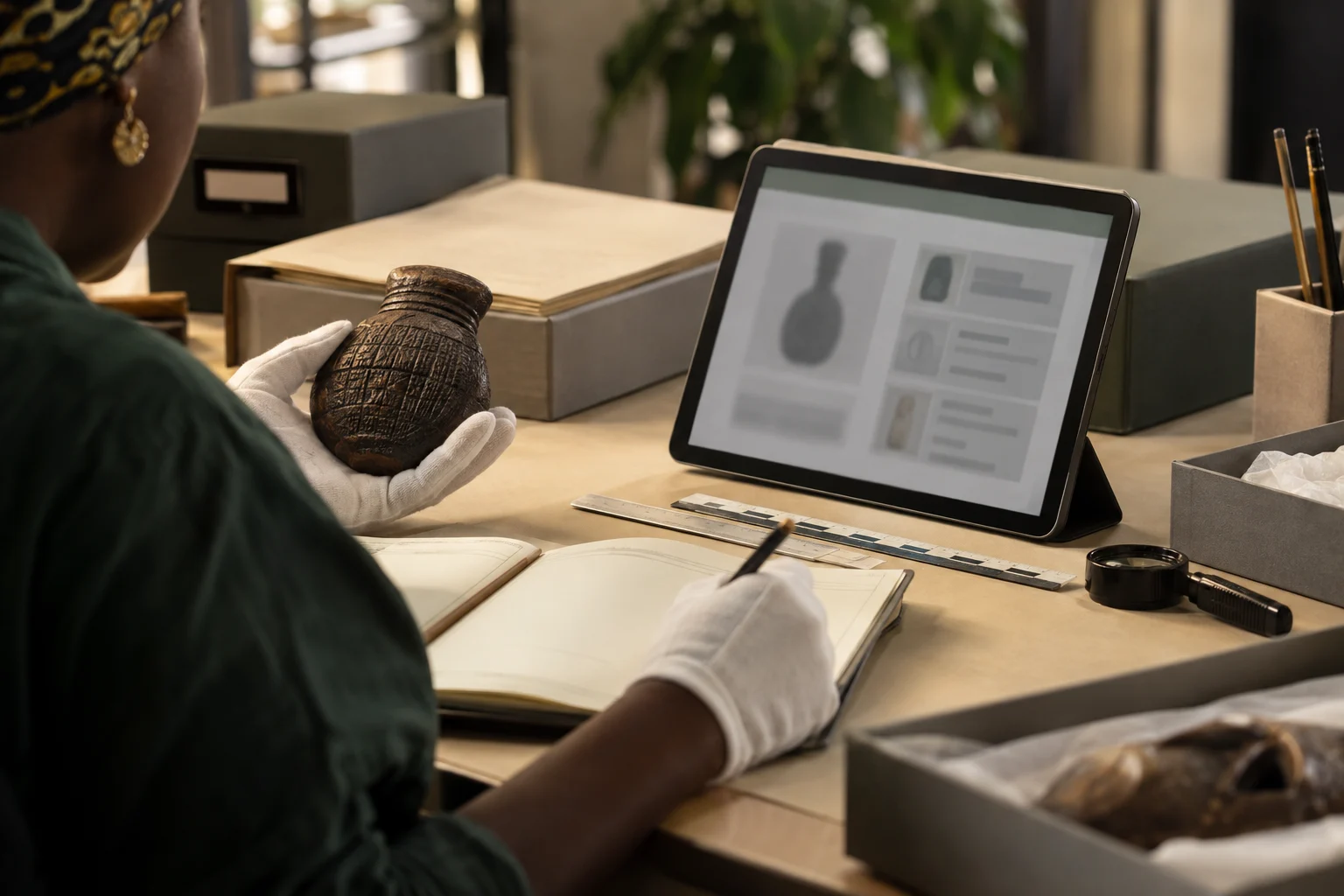
One practical test is whether a user can move from image to evidence. A strong digital record should tell a learner what is being shown, what is known, what is uncertain and where the record came from. If the public sees only a photograph and a title, the platform may inspire interest, but it has not yet done the harder work of cultural documentation. If the record includes context, provenance notes, rights information and links to related materials, it becomes a tool for study rather than a display surface.
Analysis: what digital access proves and does not prove
A digital museum proves that an institution has made a public access choice. It can show that a record exists, that images or interpretive materials have been selected, and that the public is being invited to learn. It may also reveal a useful institutional priority: reaching younger audiences, teachers, researchers and diaspora users who cannot easily visit a museum building in Lagos, Benin City, Abuja or elsewhere.
It does not automatically prove that a record is complete. A record can omit ownership history, acquisition route, community names, uncertainty, conservation status, title holder, custody location, loan terms or image rights. For Benin Bronzes and other contested heritage, those omissions are not technical details. They shape whether a viewer understands the difference between cultural belonging, legal title, physical possession and public interpretation.
This is where the method in Reclaim Your DNA's Benin Bronzes restitution tracker remains useful. A reader should separate title transfer, physical return, Nigerian-approved loan, display status, digitisation and education. A digital museum may support all of those categories, but it does not merge them into one outcome. When the public sees an object online, the record should still say where the object is, who owns it, who holds it, how it was acquired and what remains uncertain.
The best version of Nigeria's digital museum would therefore be honest about limits. It would not overclaim that access equals repair. It would make records legible, update them when new evidence emerges, link online interpretation with physical institutions, and invite educators to use the material without losing sight of provenance and authority. That is a stronger public service than a beautiful but static gallery.
Another test is update discipline. Restitution and provenance records change over time as agreements are signed, objects move, loans expire, records are corrected and institutions publish new research. A digital museum should make those changes visible instead of silently replacing old language. Date stamps, version notes and clear links to source material help readers understand whether they are seeing a launch-era description or a record that reflects later evidence.
Practical takeaways for readers and institutions
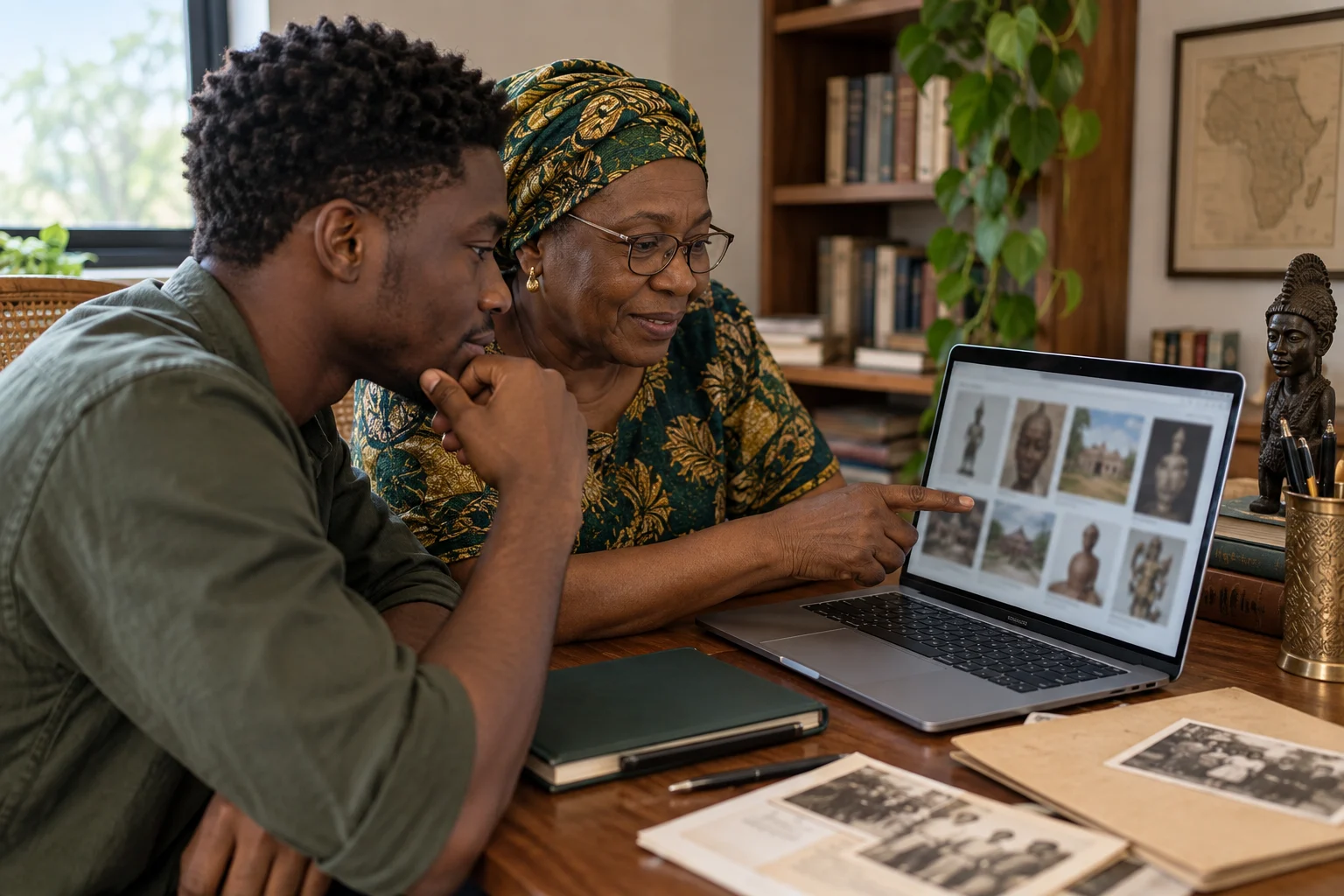
For diaspora readers, the first takeaway is to use the digital museum as a gateway, not as the final archive. Save useful records, compare names and descriptions, and check whether the platform explains source communities, materials, dates, acquisition paths and current location. Where the record is thin, treat that as a question to ask, not as a reason to dismiss the whole project.
For teachers and cultural educators, the second takeaway is to build lessons around verification. A strong classroom exercise can ask students to compare a digital museum entry with a museum label, a restitution announcement and a provenance database. The goal is not only to admire heritage online. It is to learn how cultural records are made, who controls them and how they can be improved.
For institutions, the third takeaway is to make digital records accountable. Reclaim Your DNA's guide to reading museum object records for the Benin Bronzes is relevant here because the same basic fields matter in a national digital museum: object name, cultural context, material, date or date range, acquisition history, current custodian, rights, uncertainty and links to further evidence.
For NCMM and its partners, the fourth takeaway is that public trust will come from maintenance, not launch language. The project should remain useful after the press release cycle: links should work, metadata should improve, records should be corrected when errors are found, and public interpretation should be Nigerian-led rather than treated as a technical add-on.
For restitution readers, the fifth takeaway is to resist false oppositions. Digital access is not enough, but it is also not meaningless. It can support research, diaspora learning and public accountability when it is tied to transparent records and physical cultural infrastructure. It becomes weak only when it is used to avoid the harder work of return, conservation, ownership clarity and local access.
The final institutional takeaway is to design for challenge as well as celebration. Heritage platforms should make room for correction, community knowledge and contested histories. That does not mean every public comment becomes an official fact. It means the institution has a visible method for receiving evidence, reviewing it, crediting contributors and updating records when the evidence is strong.
Conclusion
Nigeria's digital museum is best understood as a public-access promise that now has to prove itself through records, maintenance and educational use. The verified sources show a partnership announced in 2024, a launch reported by government in 2025, and a related physical museum upgrade described in 2026. That is a meaningful sequence, but not a blank cheque.
The standard should be high because the audience deserves more than images. A useful digital museum should help a student ask better questions, help a diaspora family locate heritage context, help a researcher compare records, and help the public see where restitution, custody, loans and access still need clarity. Online heritage access is powerful when it points back to evidence, authority and living communities. It is weak when it asks the screen to replace those things.
Frequently Asked Questions
Is Nigeria's digital museum the same thing as restitution?
No. It can improve access and education, but restitution depends on title, custody, agreements, return logistics and public governance.
Who announced the NCMM digital museum partnership?
IHS Towers announced a November 2024 partnership between IHS Nigeria, NCMM and the Federal Ministry of Art, Culture, and the Creative Economy.
What should readers check in a digital museum record?
Check the object name, cultural context, material, date or date range, acquisition history, current custodian, title status, rights and stated uncertainties.
Why link digital access with physical museum care?
Online access helps remote audiences, but physical museums still carry conservation, interpretation, local visitation and public trust responsibilities.
Was a partner link used in this article?
No. Partner watch sources are disabled, and no partner link was necessary for this evidence-led guide.
References and Further Reading
- IHS Nigeria Partners with the National Commission for Museums and Monuments to Digitize Nigeria's Cultural Heritage
- Nigeria Launches Digital Museum To Preserve Cultural Heritage
- IHS Nigeria Sponsors the Renovation and Upgrade of Facilities at the National Museum, Lagos
- Code of Ethics
- Return & Restitution Intergovernmental Committee