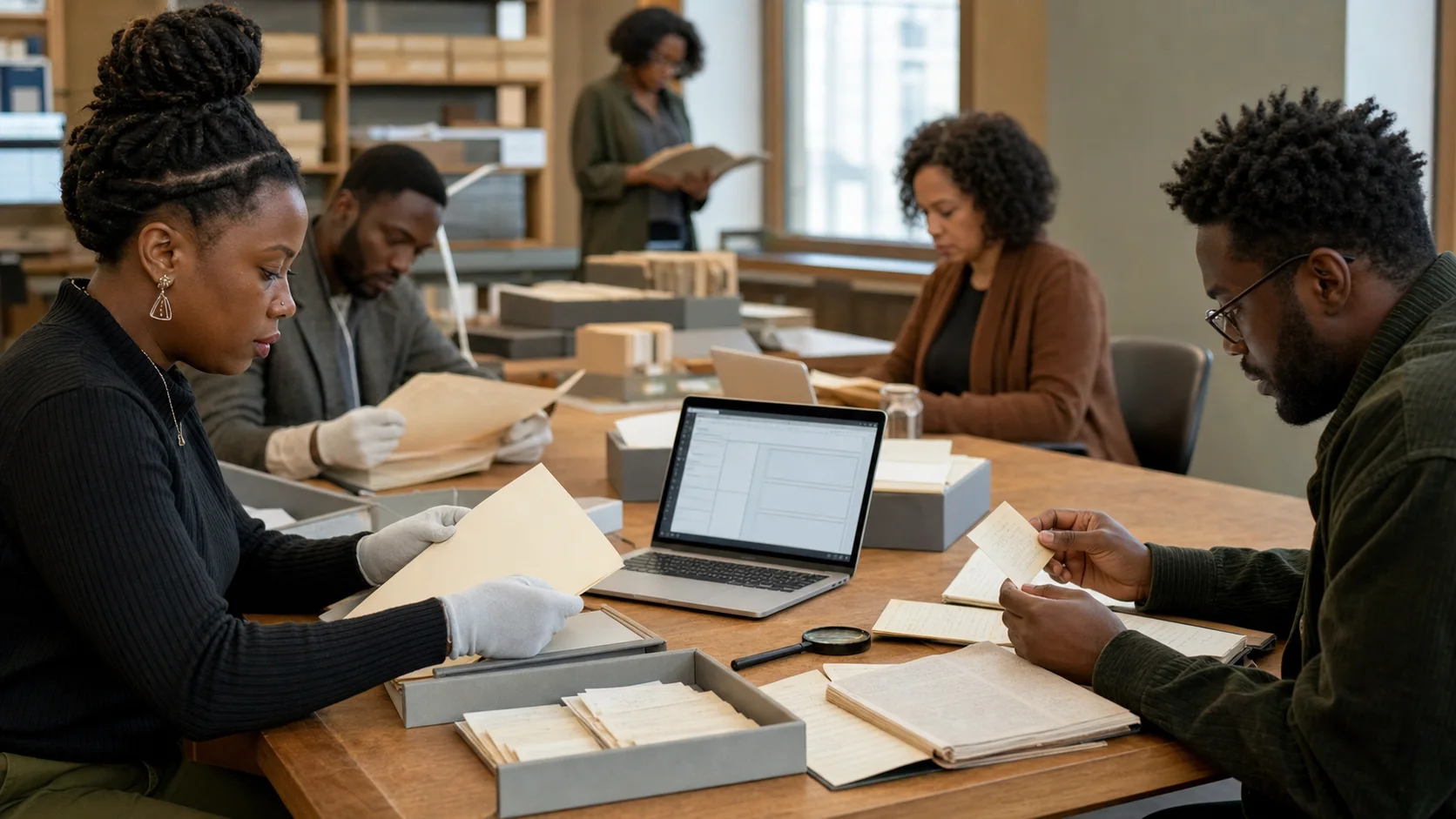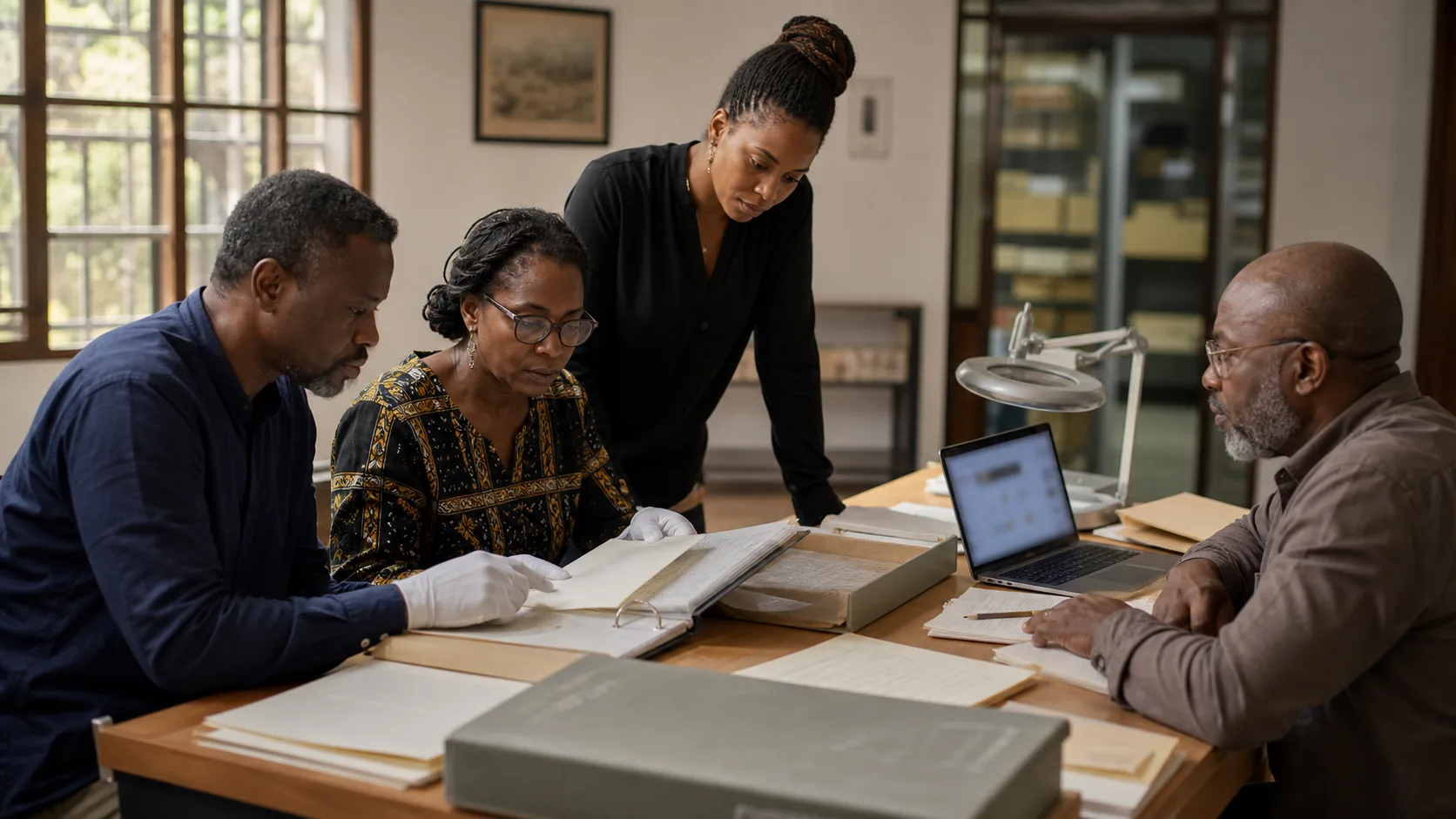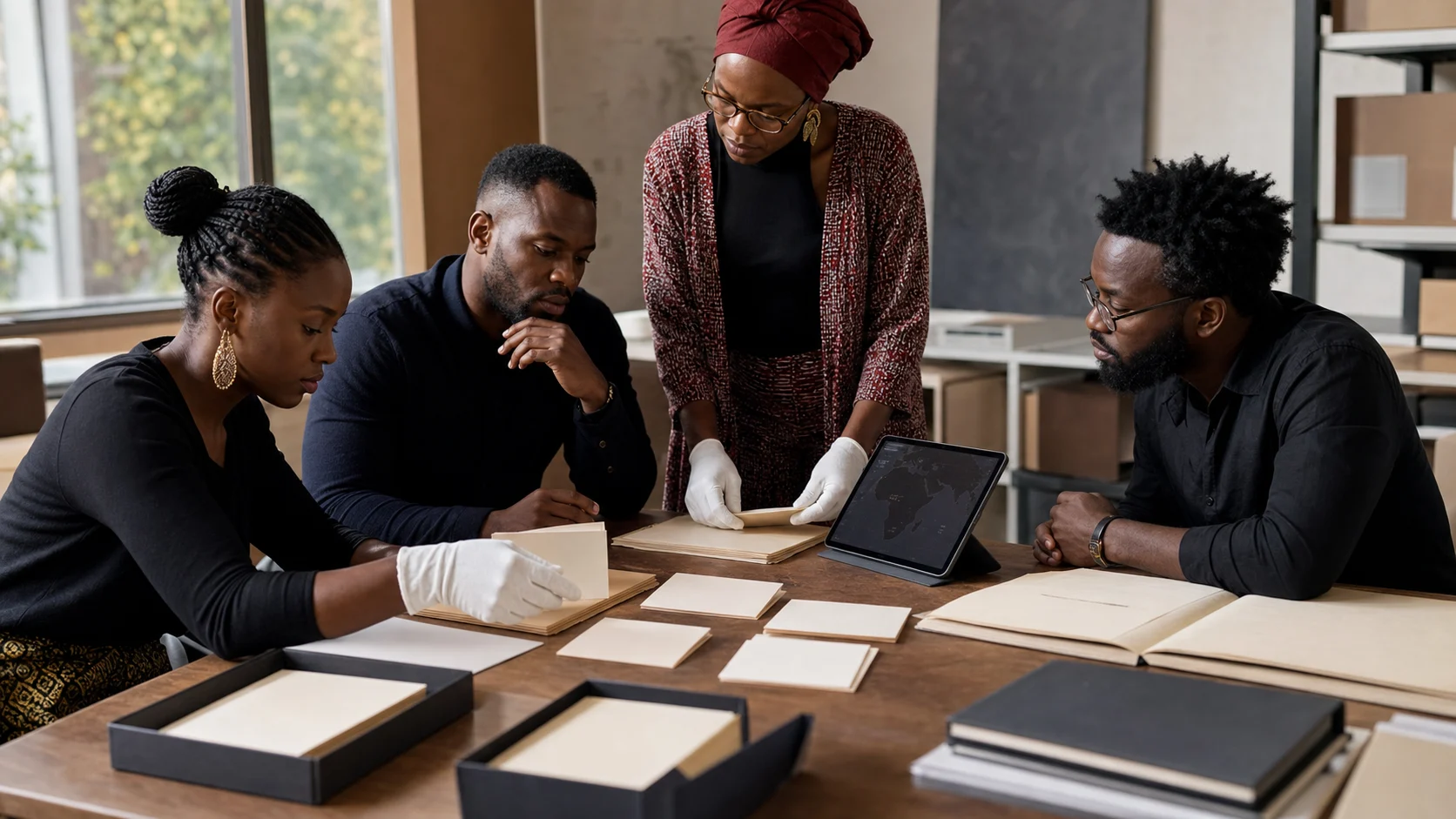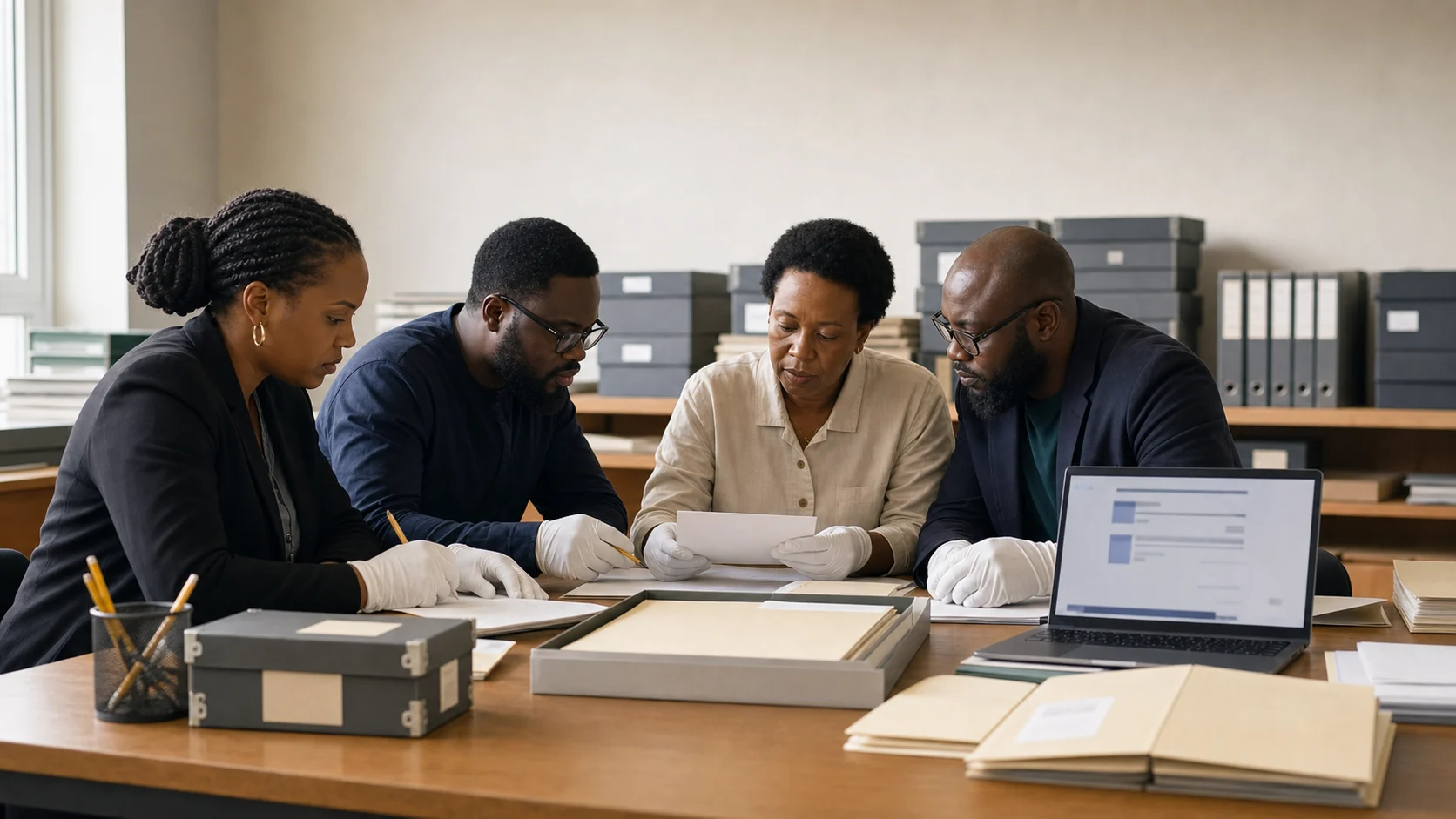
This guide is part of the Reclaim Your DNA research library. It helps readers understand Nigerian heritage, the Benin Bronzes, the 1897 looting of Benin City, and the modern movement for cultural restitution through context, evidence and a concrete path to action.
Use this guide with the Reclaim Your DNA campaign background, the petition, and the wider research library. It builds on our articles about museum object records, tracking title, return and loans, Nigerian public records, and university collections.
Why private collections are part of the restitution field
Benin Bronzes restitution is often discussed through national museums, university collections and government ceremonies, but private collections and the art market also matter. The 1897 looting of Benin City did not move objects only into public galleries. The dispersal also ran through dealers, expedition members, family inheritances, private collectors, auction catalogues and later museum purchases from private owners. Any serious campaign for Nigerian heritage return has to ask what happens before an object reaches a museum, after it leaves a museum, and while it sits in a private collection where public scrutiny is weaker.
The British Museum's public history is useful here because it names the wider route. Its account explains that thousands of ceremonial and ritual objects were taken after the British occupation of Benin City in 1897, and that many plaques and other objects were sold to museums, private dealers and collectors. It also notes later acquisitions from major private collections. That means private ownership is not a side issue. It is one of the channels through which colonial violence became normal market property.
For Reclaim Your DNA readers, the practical point is simple: a private holder cannot solve the problem by saying the object was bought long ago, inherited quietly, or obtained from a reputable dealer. The relevant questions are deeper. What is the object? Is it connected to the Kingdom of Benin or Benin City? Does the chain of possession pass through 1897 or a later colonial sale? Has Nigerian authority been contacted? Is there a public record? If the answer is unknown, the owner has work to do before any display, sale, donation or loan.
Due diligence is an ethical duty, not a paperwork ritual
Due diligence means more than keeping an invoice in a folder. For cultural property, it means asking whether the person who holds, buys, sells, donates or displays an object has taken reasonable steps to understand its origin, legal status and ethical claim. The ICOM Code of Ethics explicitly connects museum practice with acquisition procedures, legislation, returns, restitution, due diligence and provenance. The UNIDROIT 1995 Convention also makes due diligence central when assessing the position of a possessor of a stolen cultural object, including the circumstances of acquisition, price paid, registers checked and accessible information that could reasonably have been obtained.
Those frameworks are not a complete answer to every historical colonial case, but they give readers a language for accountability. A private collector who owns a Benin object should not wait for a museum to ask questions. An auction house should not treat a short provenance note as enough if the object category, date, former owner or route points toward the 1897 dispersal. A dealer should not hide behind the phrase 'private collection' when the public question is whether Nigerian cultural heritage has been separated from Nigerian authority.
The strongest due-diligence standard is evidence plus action. Evidence means object identification, chain of custody, export history, sale history, archival references, Digital Benin comparisons, Nigerian institutional contact and transparent uncertainty. Action means pausing sale where evidence is weak, publishing what can be responsibly published, contacting the National Commission for Museums and Monuments, considering voluntary return, and refusing to turn unclear history into market value. A clean-looking catalogue entry is not the same as a clean history.
The phrase private collection should raise questions
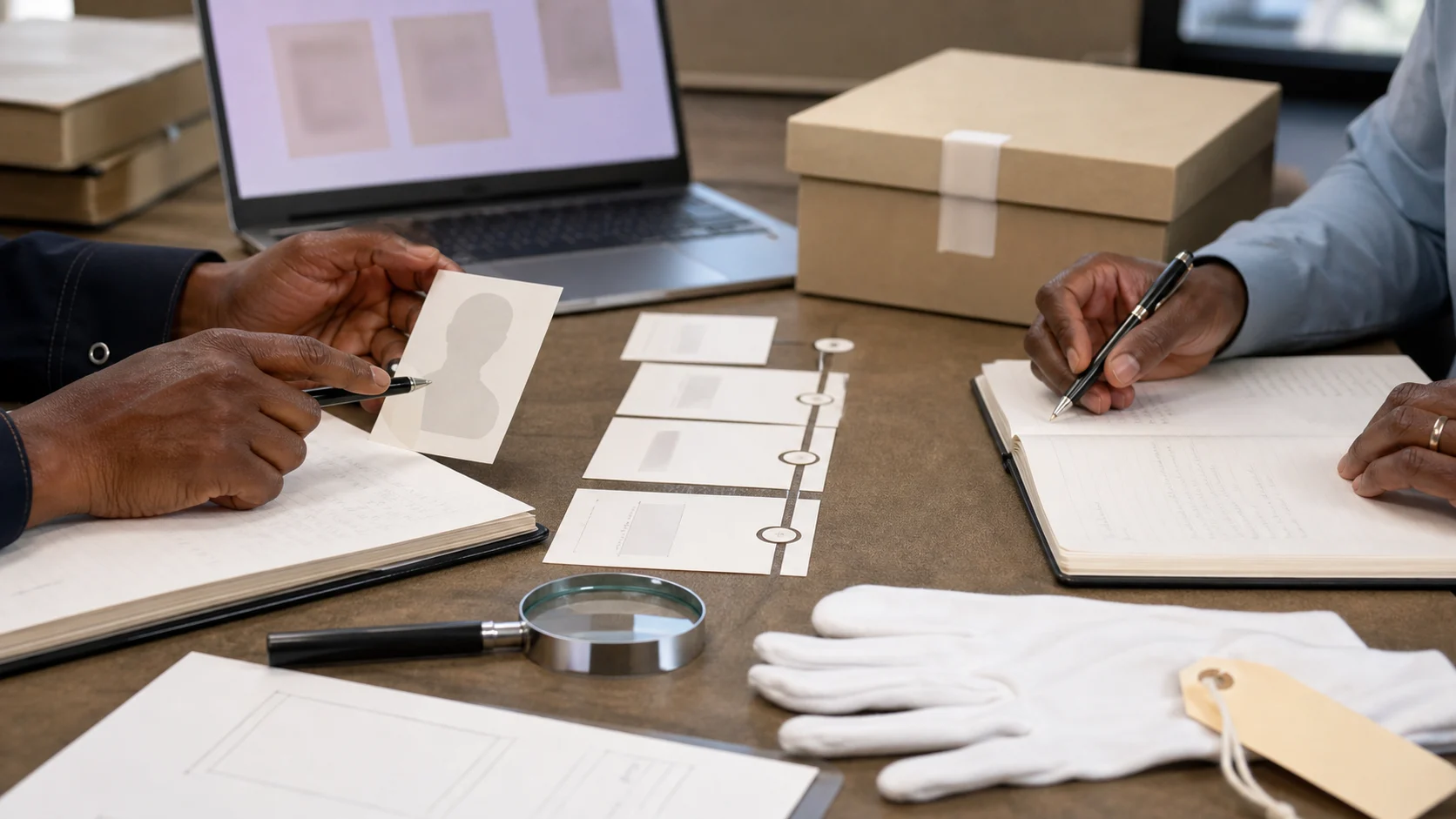
Auction and exhibition language often uses 'private collection' as if it were an answer. In reality, it is usually a beginning. A catalogue may say 'European private collection', 'acquired before 1970', 'by descent', or 'from an old family collection'. Those phrases can be meaningful if supported by documentation. They can also hide the most important details: who first removed the object, who sold it after 1897, whether it left Nigeria legally, whether it was known to be from Benin City, and whether Nigerian authorities have ever been consulted.
Readers should therefore treat private-collection language as a prompt for precise questions. Who owned it before the named private collection? What documents prove that date? Is there an export certificate or only an invoice? Does the object match categories known from Benin court art: plaques, commemorative heads, regalia, ivory, coral, figures or ritual objects? Is the object in Digital Benin or linked to a museum record? Does the description name the 1897 looting directly, or does it use softer language such as 'collected', 'acquired' or 'brought to Europe'?
This is not about assuming every object is identical or every case is legally simple. Some works associated with Benin City sit outside the 1897 expedition context, and object histories vary. The British Museum itself distinguishes objects traced directly to 1897 from other works associated with Benin City. But the existence of complexity does not excuse vague records. It means the private holder has a higher duty to show what is known, what is uncertain and what steps have been taken to contact the right Nigerian institutions.
Use Digital Benin to compare records before believing a sale story
Digital Benin is one of the strongest tools for public due diligence because it reconnects dispersed Benin records across institutions and countries. Its catalogue states that it brings together data, images and linked research for 5,304 historic Benin objects from 139 institutions in 21 countries. It also includes fields for provenance, institutions, Edo designations, archival documents and maps. A private-sale description should be read beside that wider record, not in isolation.
A practical comparison can reveal whether a catalogue is doing enough. If the sale text gives only a collector name, Digital Benin may help identify similar object categories, provenance names, institutions or archival routes. If the object is already in a public record, readers can compare descriptions, dates and legal status. If the object is not listed, the absence is not proof of a clean title. It simply means more research is needed. Public platforms are aids to research, not magic filters that clear the market.
The key is to look for patterns. Was the object type heavily dispersed after 1897? Do known examples in museums have similar routes through expedition members or early dealers? Does the language match old colonial collecting habits? Are there unexplained gaps between 1897 and the first private owner? A responsible auction house or private holder should do this work before asking the public to accept a sale, a donation or a claim of lawful possession.
Auction houses should publish the limits of their knowledge
Auction houses operate in a commercial environment, but that does not reduce their public responsibility. When they handle cultural objects from a known colonial violence context, their descriptions should not be written only to support confidence and price. They should also disclose the limits of knowledge. A responsible note should separate object identification, historical context, 1897 evidence, documented ownership, uncertain gaps, export evidence, prior publications, museum comparisons, and any contact with Nigerian authorities.
The weakest market language is often the most polished. A beautiful photograph, a prestigious estimate, and a phrase such as 'important private collection' can make an object feel legitimate while leaving the central history unexamined. For Benin material, that is not enough. The object category itself carries a warning because many Benin court works were violently removed and then sold into European and American collections. The burden should not fall on Nigerian institutions or diaspora readers to prove concern after a catalogue has already been published.
The stronger standard is a sale pause when the record is incomplete. If evidence suggests a 1897 link, the next step should be contact with NCMM and relevant Nigerian or Edo authority, not rapid marketing. If title or export history is unclear, the object should not be converted into public prestige through an exhibition or private sale. If the holder wants to donate it, the receiving institution should require the same research and should not accept a gift that simply transfers the ethical problem to a public museum.

Private return can be public repair
Restitution is not only a state-to-state or museum-to-Nigeria process. A private owner can also take meaningful action. That action might include commissioning independent provenance research, publishing a responsible object record, contacting NCMM, entering a voluntary return process, supporting conservation or documentation work under Nigerian direction, or transferring title without using return as a publicity trophy. The point is not to make the private holder the hero. The point is to restore Nigerian authority over heritage separated by colonial violence.
Recent public returns from the Smithsonian, Horniman Museum, Cambridge and the Netherlands show that institutions can move from evidence to title transfer, physical return, loan arrangements or public access planning. Private owners should learn from that structure. The steps are not mysterious: identify the object, document the chain, contact the right authority, state what will happen to ownership, state where the object will be physically held, and make the public record clear enough for students and families to understand.
A private return also has educational value because it breaks the silence around hidden collections. Many people imagine restitution as a fight over famous display cases. In reality, much cultural heritage sits in storerooms, homes, estates, trusts and private offices. When a private owner acts responsibly, it helps establish a wider norm: inherited possession is not moral ownership, market confidence is not cultural authority, and quiet custody should not override a public claim rooted in Nigerian history.
What diaspora advocates can ask without becoming specialists
Diaspora advocates do not need to become art lawyers to ask better questions. They can begin with a simple checklist. What is the object called? Who made or used it, and what Edo or Benin court context is known? What is the earliest documented date outside Nigeria? Is there a named expedition member, dealer, collector, museum, sale or inheritance? Does the record mention 1897? Has the holder checked Digital Benin? Has NCMM or another Nigerian authority been contacted? Is there a plan for return, title transfer, loan or public access?
Those questions are stronger than broad outrage because they force the holder to answer at the level of evidence. If an auction house claims due diligence, ask what sources were checked. If a private collector claims good faith, ask for the provenance chain. If a museum accepts a private gift, ask whether the object record will be public and whether Nigerian authority has been consulted. If a journalist covers a sale, ask them to separate price from provenance and to name the colonial history where the evidence supports it.
Diaspora action should also avoid exaggeration. Not every unclear object can be resolved from a screenshot. Not every sale page gives enough data for a final conclusion. The ethical move is to ask precise questions, cite public sources, preserve screenshots where legally allowed, and direct attention to Nigerian institutions and public records. The campaign is strongest when it turns concern into repeatable research habits.
A practical due-diligence checklist for private holders
First, identify the object honestly. Do not use a vague African art category if the object may be from Benin City, the Kingdom of Benin or an Edo court context. Second, build a dated chain of custody. Start with the present holder and work backward through inheritance, dealer, auction, museum, expedition member, collector and archive references. Third, separate possession from authority. A bill of sale may explain a transaction, but it does not answer whether Nigerian cultural authority has been respected.
Fourth, compare public records. Search Digital Benin, museum catalogues, institutional return statements, UNESCO materials, ICOM ethics resources and Nigerian cultural sources. Fifth, document gaps rather than hiding them. A gap from 1897 to a twentieth-century private owner is not a small detail. Sixth, contact Nigerian authority before sale or public display when the object may be tied to the 1897 looting or another contested route. Seventh, publish enough information for independent review while respecting legitimate conservation, security and privacy limits.
Finally, choose repair over market timing. If the object has a credible Benin restitution issue, do not rush it to auction because attention is high. Do not use Nigerian heritage as a prestige asset while keeping Nigerians outside the decision. Do not donate it to a museum simply to obtain reputation or tax benefit without solving the authority question. A responsible holder should be able to say what was checked, who was contacted, what remains uncertain, and what practical step toward Nigerian-led resolution comes next.
Reader takeaways for market accountability
The first takeaway is that private collections are not private in the moral sense when they contain heritage taken from a public cultural world. The second is that due diligence must be active. A collector, dealer or auction house should not wait for a public scandal before checking 1897 history, Digital Benin records, Nigerian authority and legal-ethical frameworks. The third is that a beautiful object photograph is not evidence of a legitimate chain of custody.
The fourth takeaway is that public language matters. Phrases such as 'old European collection' or 'acquired before 1970' should lead to more questions, not less. The fifth is that voluntary return is possible. Private holders can move toward title transfer, return, Nigerian-approved loan or transparent public access without pretending that old possession created cultural authority. The sixth is that diaspora readers can help by asking focused questions, sharing source-backed explanations and supporting the petition.
The practical action is to choose one public sale, exhibition notice, museum gift announcement or private-collection reference and test it against this checklist. Does it name 1897 where relevant? Does it identify provenance gaps? Does it point to Nigerian institutions? Does it link to Digital Benin or public records? Does it say who has authority now? If not, ask for those facts. Market accountability begins when vague prestige language is no longer enough.
Frequently Asked Questions
Why do private collections matter for Benin Bronzes restitution?
Many Benin objects moved through dealers, private collectors, family inheritances and later museum purchases, so private ownership is part of the same post-1897 dispersal history.
What should due diligence include before selling or donating a Benin object?
It should include object identification, a dated provenance chain, export and sale records, Digital Benin comparison, public museum records, Nigerian institutional contact and transparent documentation of gaps.
Is a phrase like old private collection enough provenance?
No. It may be one useful clue, but it does not explain the object's route from Benin City, any 1897 connection, export status, legal title or Nigerian authority.
What can diaspora readers do when they see a questionable sale?
Save the public details, compare them with authoritative sources, ask precise provenance questions, avoid unsupported claims and direct attention toward Nigerian institutions and the Reclaim Your DNA petition.
References and Further Reading
- Digital Benin
- Digital Benin: Catalogue
- British Museum: Benin Bronzes
- British Museum: Collecting histories
- National Commission for Museums and Monuments
- UNESCO: 1970 Convention
- UNESCO: 1970 Convention legal text
- UNESCO: Return and restitution
- ICOM: Code of Ethics
- UNIDROIT: 1995 Convention on stolen or illegally exported cultural objects
- Smithsonian: return of 29 Benin Bronzes
- Horniman Museum: return ownership of Benin bronzes
- Government of the Netherlands: 119 Benin Bronzes returning home
- University of Cambridge: legal ownership of 116 Benin artefacts transferred