This guide is part of the Reclaim Your DNA research library. It helps readers understand Nigerian heritage, the Benin Bronzes, the 1897 looting of Benin City, and the modern movement for cultural restitution through context, evidence and a concrete path to action.
Use this guide with the Reclaim Your DNA campaign background, the petition, and the wider research library. It is designed to sit beside our guides on archive evidence after the 1897 looting, reading museum object records, official restitution agreements, and teaching the Benin Bronzes.
Why a return file makes diaspora advocacy stronger
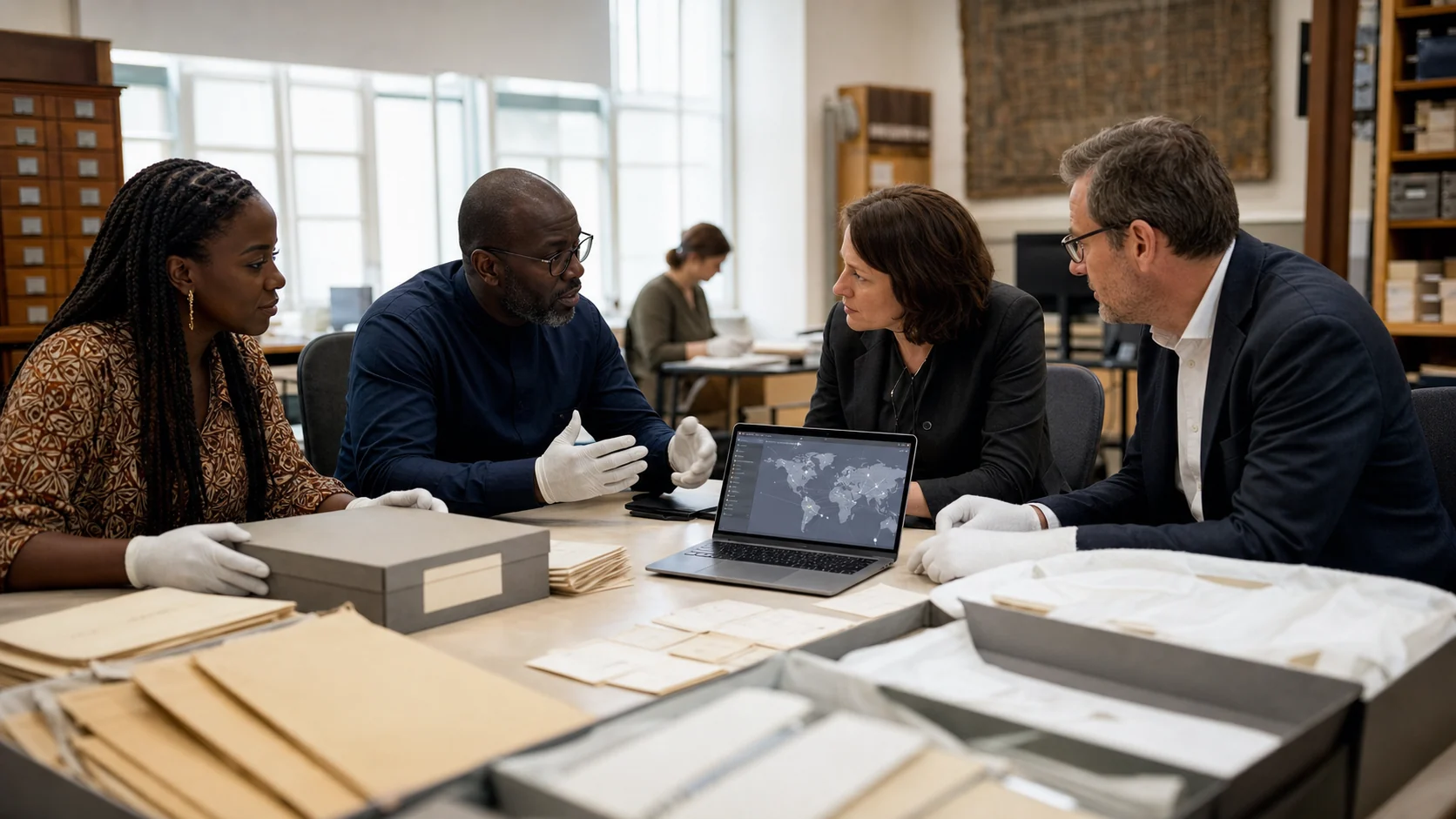
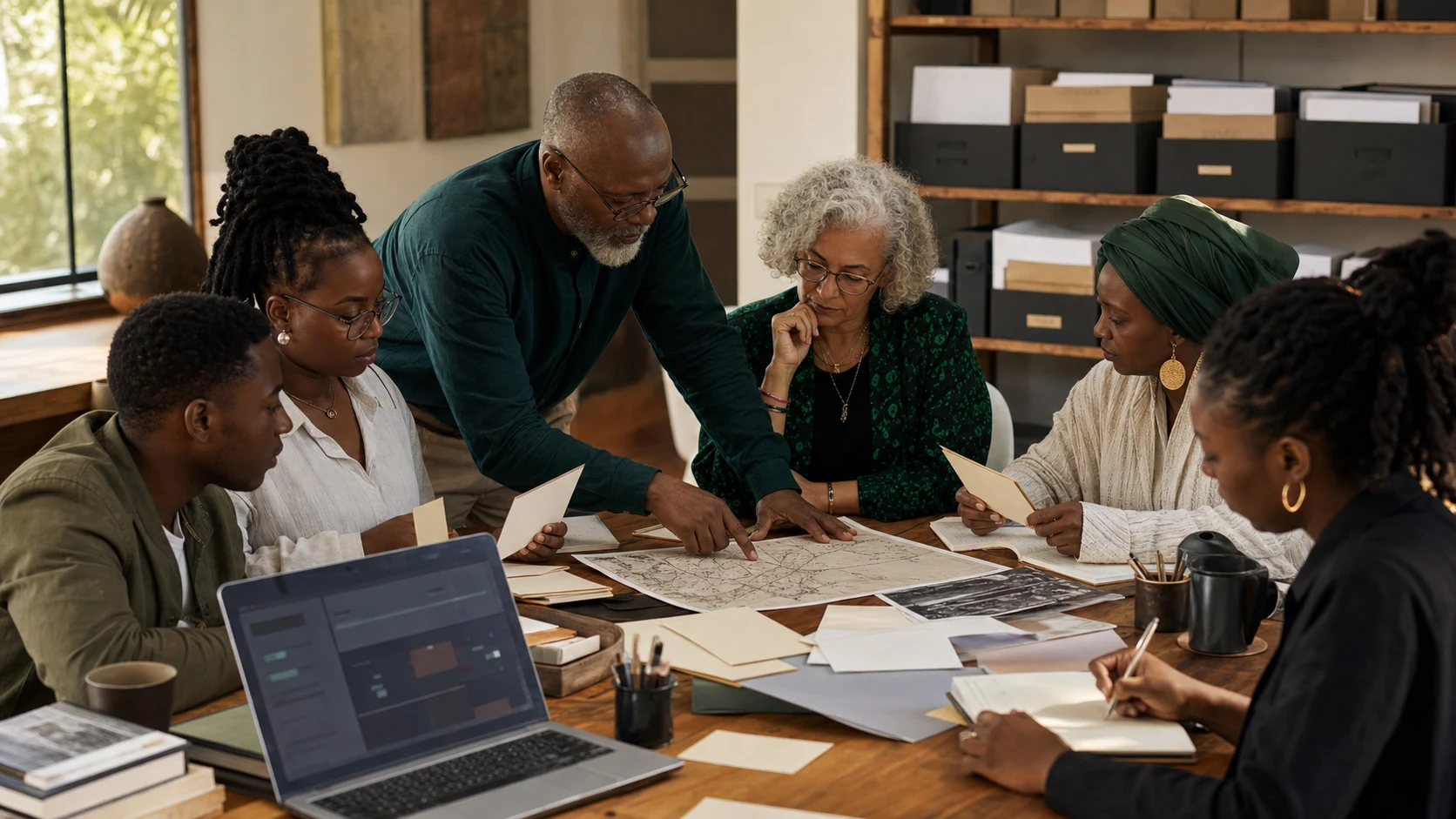
A diaspora return file is a small, disciplined evidence packet about one object, one institution, one provenance name or one return claim. It is not a legal brief, and it should not pretend to replace Nigerian institutional authority. Its value is public clarity. When a family, student group, journalist, cultural association or campaign supporter can show the object identity, the 1897 context, the collection route, the current title status and the missing public question in one place, advocacy becomes harder to dismiss as only emotion.
Emotion belongs in the restitution conversation. The Benin Bronzes carry pride, grief, anger, beauty, memory and unfinished repair. But public pressure works best when feeling is paired with a record that can be checked. A vague post saying that museums should return what they stole is morally understandable. A source-backed file asking why a named institution has not updated a named object record after a title transfer, or why it omits the 1897 looting from its label, gives that institution a concrete issue to answer.
This method also protects the campaign from weak claims. Not every online image is clearly tied to the 1897 looting. Not every object called a Benin Bronze has the same record quality. Not every return announcement means that physical custody changed. A return file lets readers separate what is documented, what is likely, what is unknown and what should be asked next. That discipline is essential for a serious campaign tone.
Start with Digital Benin, then compare outward
Digital Benin is the best public starting point because it treats the dispersed Benin corpus as a connected field. Its platform currently connects data from 5,304 objects across 139 institutions in 21 countries and links object records to oral histories, Edo language, provenance names, archival documents, maps and museum collections worldwide. For diaspora readers, that means a single institution can be studied inside a wider pattern of dispersal rather than as an isolated gallery page.
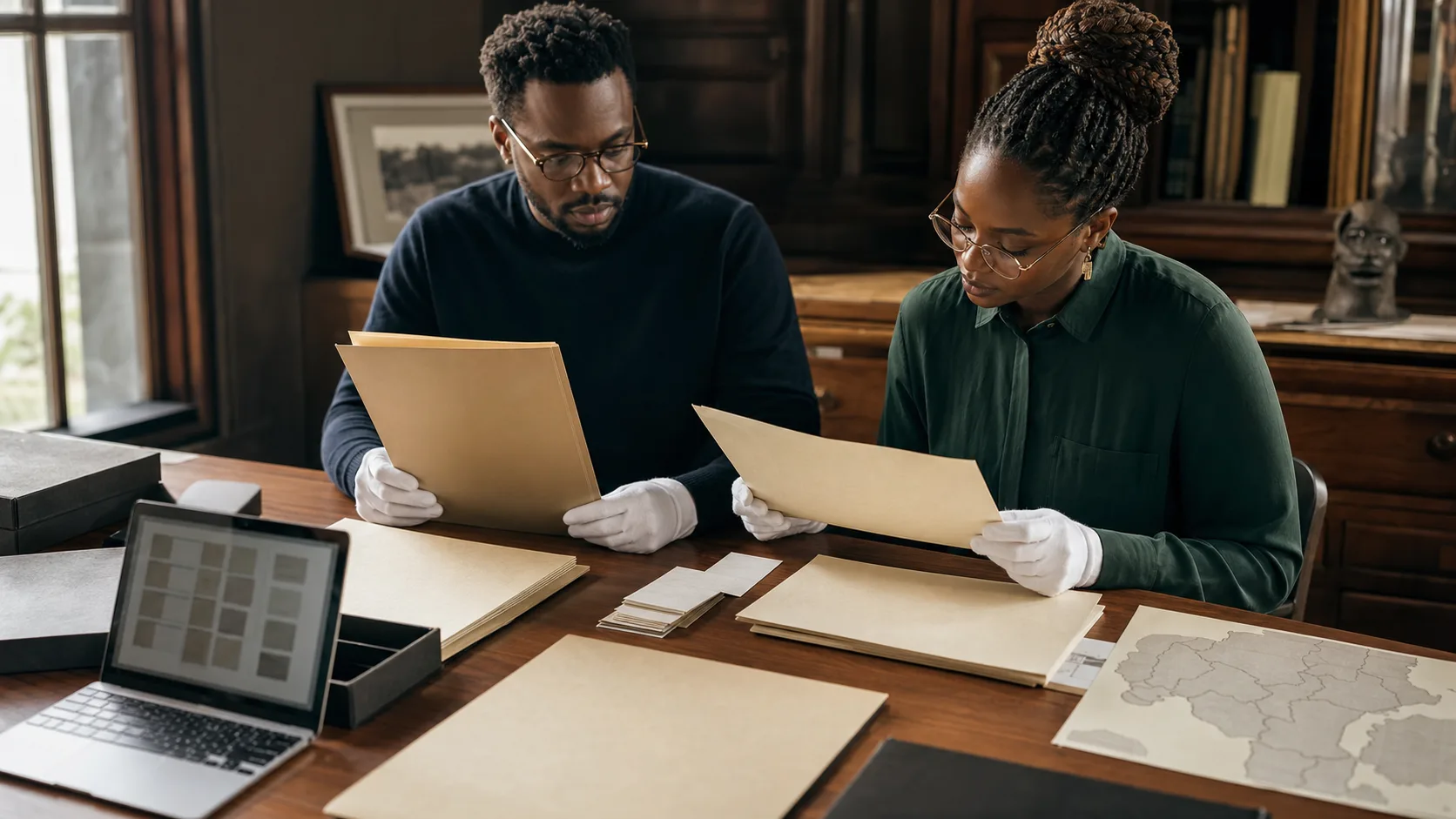
Begin by searching Digital Benin for the object type, holding institution, accession number, provenance name or object group. Record the page URL, object title, Edo designation if present, material, dimensions if available, date range, holding institution, image rights and provenance names. If the object is not found, record that too. Absence is not proof that the object is unrelated to Benin history, but it is a useful limit that keeps the file honest.
Then compare the Digital Benin record with the holding institution's own public page. Does the museum use the same object name? Does it name 1897 clearly? Does it give a donor, dealer or military route? Does it link back to Digital Benin? Does it state whether the work has been returned, transferred in title, retained, loaned or still under discussion? The comparison often reveals the advocacy target: a missing link, a vague acquisition sentence, an outdated ownership field or an image-rights restriction that blocks education.
Name the 1897 evidence without flattening Benin history
A return file should never make 1897 the only fact about Benin heritage. The works belong first to the Kingdom of Benin, the royal court, specialist guilds, Edo cultural knowledge, ceremonial practice, diplomacy, memory and art history. The 1897 British attack explains violent displacement; it does not define the full cultural meaning of the objects. A strong file therefore has two layers: original cultural context and colonial removal evidence.
The British Museum's own public history provides a clear baseline for the removal layer. It states that British forces occupied Benin City in February 1897, looted shrines and associated compounds, burned the palace and took thousands of ceremonial and ritual objects as official spoils of war or distributed them among expedition members. That language is important because it comes from a major holding institution and names the source event directly.
Use that baseline carefully. If a museum record documents a specific 1897 route, cite the record and state the route. If a record only places the object in the broader group of historic Benin material later acquired through a dealer or collector, state that the file needs more evidence. A source-backed campaign gains credibility when it does not turn every uncertainty into certainty. The demand can still be strong: publish the missing record, open the accession file, link to Digital Benin and consult Nigerian authority.
Build the object identity page
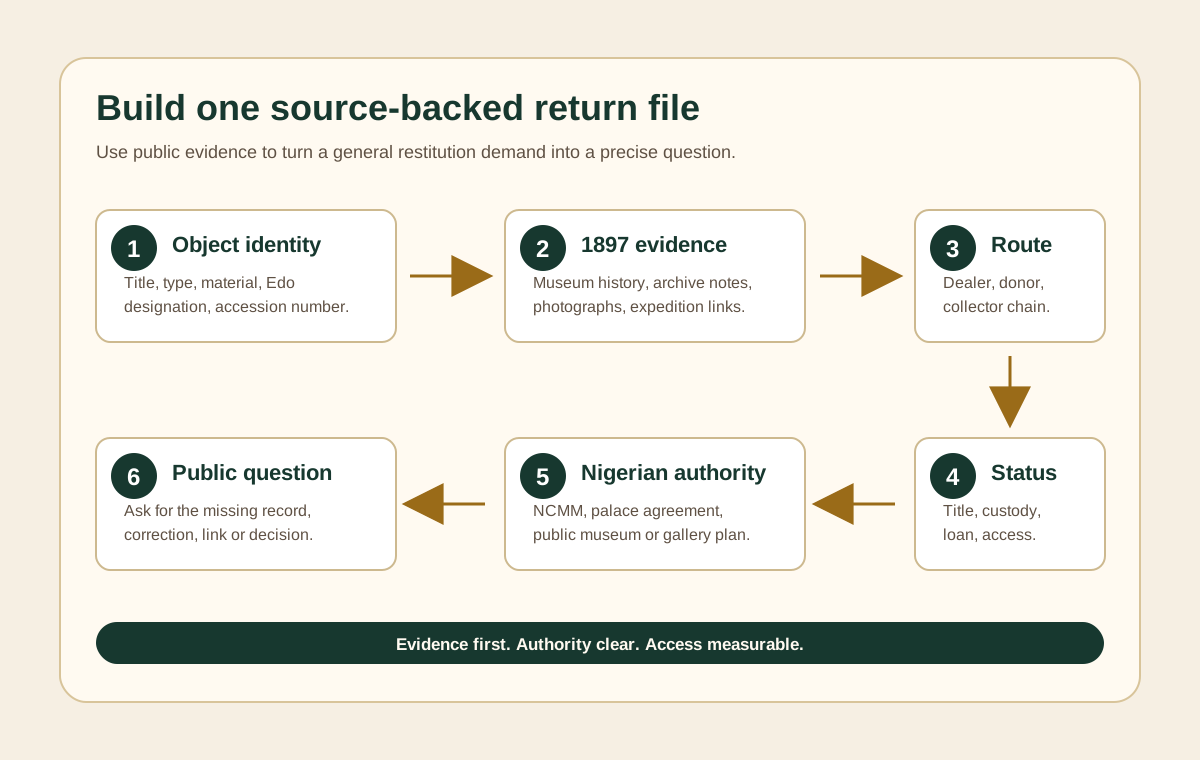
The first page of the return file should be boring in the best way. It should list the object title, alternate titles, object type, material, date or date range, dimensions if available, cultural attribution, Edo designation if present, current holding institution, accession number, Digital Benin URL, museum URL and image-rights note. These fields make the file useful for teachers, journalists and institutions because they prevent confusion between similar objects.
Add a short cultural context paragraph. If the object is a plaque, do not only say plaque. Explain that Benin plaques can connect to royal court display, visual memory, officials, attendants, ceremony, rank or diplomacy depending on the specific work. If it is a commemorative head, explain the connection to royal memory and altar practice where the sources support it. If the exact function is uncertain, say so. Cultural context should be respectful and precise, not romantic filler.
The goal is not to write a museum catalogue from scratch. It is to assemble enough identity information that the rest of the file has a stable subject. A campaign letter that asks about object number 1898,0115.23 is stronger than one that asks about a vague bronze. A classroom packet that gives the Digital Benin record and the museum record side by side teaches students how public knowledge is built.
Build the provenance route page
The second page should track the route from Benin City to the current public record as far as the sources allow. Use separate lines for removal context, expedition actor if known, dealer if known, collector if known, donor if known, museum acquisition date, current title status and current physical location. This structure matters because museums often emphasize the acquisition date while hiding the earlier removal event behind passive language.
Digital Benin's provenance tools help readers identify names and relations across records. Archival documents can add another layer, including correspondence, catalogues, photographs, annual reports and finding aids. The British Museum record for an 1897 photograph by Dr Robert Allman, for example, is useful not because readers should circulate colonial trophy images casually, but because it shows how photographs can become evidence of expedition context, possession and palace material after the raid.
Do not force the route to look complete if it is not complete. Many files will have gaps between 1897 removal, market circulation and a twentieth-century museum accession. A visible gap is a finding. It can become a precise public question: what archives were checked, does the accession file name a seller, are there auction catalogues, will the museum publish a fuller provenance note, and has Nigerian or Edo authority reviewed the record?
Separate title, custody, loans and access
The third page should separate four terms that are often collapsed in public debate. Title means legal ownership. Custody means where the object physically is and who cares for it. Loan means a temporary display or custody arrangement under agreed terms. Access means whether the public, students, researchers and source communities can see, study or reuse the record. A return may change one of these fields before it changes the others.
Recent returns show why the distinction matters. The Smithsonian transferred ownership of twenty-nine Benin works to Nigeria in 2022, with some works physically returning and some remaining in Washington on loan. The Netherlands announced the return of 119 Benin Bronzes to Nigeria in 2025 and said the Nigerian government would decide how and where they would be displayed. Cambridge announced in February 2026 that legal ownership of 116 Benin artefacts had transferred to Nigeria's NCMM under a management agreement with the Benin Royal Palace, while some works would remain in Cambridge on loan for an initial period.
A diaspora return file should therefore avoid the weak question, has it been returned? Ask instead: who owns it now, where is it now, under what agreement, for how long, where is the public record, and how will Nigerian audiences access it? These questions prevent institutions from using a loan as if it were ownership, and they also prevent campaign supporters from dismissing Nigerian-approved loan arrangements without reading the facts.

Put Nigerian authority at the center of the file
A source-backed file should not treat Nigerian authority as an afterthought. Nigeria's National Commission for Museums and Monuments is central to national museum stewardship, return claims, public records and digital access. NCMM's digital museum work also shows that Nigerian public access is not only a future gallery problem. It includes digitization, education, contextual information and the public visibility of repatriated treasures.
When a file cites a foreign museum announcement, it should also look for Nigerian public sources where available. NCMM's public note on the Netherlands return, for example, gives Nigerian framing for the return of 119 Benin Bronzes and connects the handover to national advocacy, the Oba of Benin and gallery infrastructure. That kind of source keeps the file from letting foreign institutions narrate the entire repair process.
Nigerian authority may also involve the Benin Royal Palace, state-level cultural planning, Nigerian museums, conservation institutions and future public galleries. The file should not invent governance details. It should record what the sources say, identify what they do not say and ask for clarification where needed. The standard is simple: the record should show who now has the right to decide, not only who used to possess.
Use ethics standards as a floor, not a substitute for action
International ethics sources are useful because they give public language for restitution, cooperation and cultural-property responsibility. UNESCO's return and restitution work frames cultural property return as a matter of international cooperation and repair. ICOM's code of ethics gives museums professional duties around provenance, acquisition, documentation, cultural sensitivity and cooperation with source communities. These frameworks help diaspora readers ask informed questions.
But ethics language should not become a waiting room. A museum can cite dialogue, research and professional standards while delaying decisions for years. The return file should ask whether ethical principles have produced public records, title transfer, access planning, Nigerian consultation and corrected labels. Provenance research is valuable when it leads to transparency and action. It is weak when it becomes a permanent substitute for accountability.
This is where a one-page evidence table helps. Put the institution name in one column, then add fields for Digital Benin link, 1897 language, provenance note, Nigerian contact or claim, title status, custody status, public access plan, image rights and next question. A table makes delay visible. It also helps campaigners avoid exaggeration because each field must be sourced or marked unknown.
Turn the file into a public question
The final page should be a public question written in plain language. It might ask a museum to update an object page with 1897 provenance language. It might ask why a returned work still appears online as if the former institution owns it. It might ask whether a Digital Benin link will be added. It might ask whether image rights permit classroom reuse. It might ask whether Nigerian authorities have reviewed a loan label.
The question should be specific, sourced and answerable. Avoid a long accusation when a shorter request would work better. Start with the evidence: according to this museum page, this Digital Benin record and this official return announcement, the public record appears to be missing a title-status update. Then ask the institution to clarify or correct it. Attach the file or publish a short version that lets other readers verify the chain.
This process turns diaspora advocacy into civic record repair. It does not require insider access, expensive travel or specialist credentials. It requires patience, source discipline and a refusal to let public memory stay vague. Every corrected label, linked record, clarified loan, opened archive note or improved teaching packet makes the restitution movement more concrete.
A practical template for readers
Use this template for one object or institution. First, write the subject line: object, institution or return claim. Second, capture identity fields: title, object type, Edo term, accession number, material, date range and URLs. Third, capture evidence fields: 1897 language, provenance names, archive documents, photographs if ethically usable and acquisition route. Fourth, capture status fields: current owner, physical location, loan terms and public access notes.
Fifth, capture authority fields: NCMM, Benin Royal Palace, Nigerian museum, government agreement or other named source. Sixth, capture education fields: image rights, teaching reuse, links to Digital Benin, related Nigerian sources and the best internal campaign pages for context. Seventh, write one public question. Eighth, save the date, because records change and a file without a date can mislead readers later.
The file can be a shared document, spreadsheet, PDF, classroom handout or public post. The format matters less than the discipline. Each claim should have a source. Each unknown should be marked as unknown. Each action should be precise. Reclaim Your DNA readers can then connect the file back to the campaign background, the petition and the research library, making public learning part of public pressure.
Takeaways for diaspora groups, museums and educators
For diaspora groups, the main takeaway is to organize evidence before asking for action. Choose one object or institution. Build the file. Compare Digital Benin, museum records, official return announcements and Nigerian sources. Then ask for the missing correction, title clarification, archive link or public access plan. This is slow enough to be credible and practical enough to repeat.
For museums, the takeaway is that public readers are becoming better record auditors. They can compare ownership language, provenance routes, Digital Benin entries, official announcements and image-rights statements. If a public record is outdated, vague or institution-centered after restitution, the gap will increasingly be visible. Better records are not a favor to campaigners. They are part of ethical stewardship.
For educators, the return file is a teaching method. It lets students learn Benin cultural context, colonial history, source comparison, digital literacy, Nigerian authority and civic action in one exercise. The lesson is not only that the Benin Bronzes should return. The lesson is that public memory can be repaired through evidence, records and repeated questions that move from the archive to the classroom to the petition.
Frequently Asked Questions
What is a diaspora return file?
It is a small source-backed evidence packet about one object, institution or restitution claim, used to ask precise public questions about provenance, ownership, custody, Nigerian authority and access.
Does a return file replace Nigerian museum authority?
No. It supports public literacy and advocacy. Decisions about claims, custody and official records belong with Nigerian authorities and the relevant cultural institutions.
Which sources should readers start with?
Start with Digital Benin, the holding museum record, official return announcements, Nigerian sources such as NCMM, and ethics frameworks from UNESCO or ICOM when relevant.
What should a reader ask after building the file?
Ask for one concrete correction or clarification: an updated ownership field, a clear 1897 provenance note, a Digital Benin link, loan terms, image-rights guidance or Nigerian public access information.
References and Further Reading
- Digital Benin
- Digital Benin: Catalogue
- Digital Benin: Provenance
- Digital Benin: Archival Documents
- British Museum: Benin Bronzes
- British Museum: Dr Robert Allman 1897 photographic print
- Smithsonian: return of 29 Benin Bronzes
- Smithsonian National Museum of African Art: Benin Bronzes, Ambassadors of the Oba
- Horniman Museum: return ownership of Benin bronzes
- Government of the Netherlands: 119 Benin Bronzes returning home
- National Commission for Museums and Monuments
- NCMM: Digital Museum partnership
- University of Cambridge: legal ownership of 116 Benin artefacts transferred
- UNESCO: Return and restitution
- ICOM: Code of Ethics