This guide is part of the Reclaim Your DNA research library. It helps readers understand Nigerian heritage, the Benin Bronzes, the 1897 looting of Benin City, and the modern movement for cultural restitution through context, evidence and a concrete path to action.
Use this guide with the Reclaim Your DNA campaign background, the petition, and the wider research library. It builds on our guides to archive evidence after 1897, official restitution agreements, university collections, and tracking title, return and loans.
Why the Swiss return deserves close attention
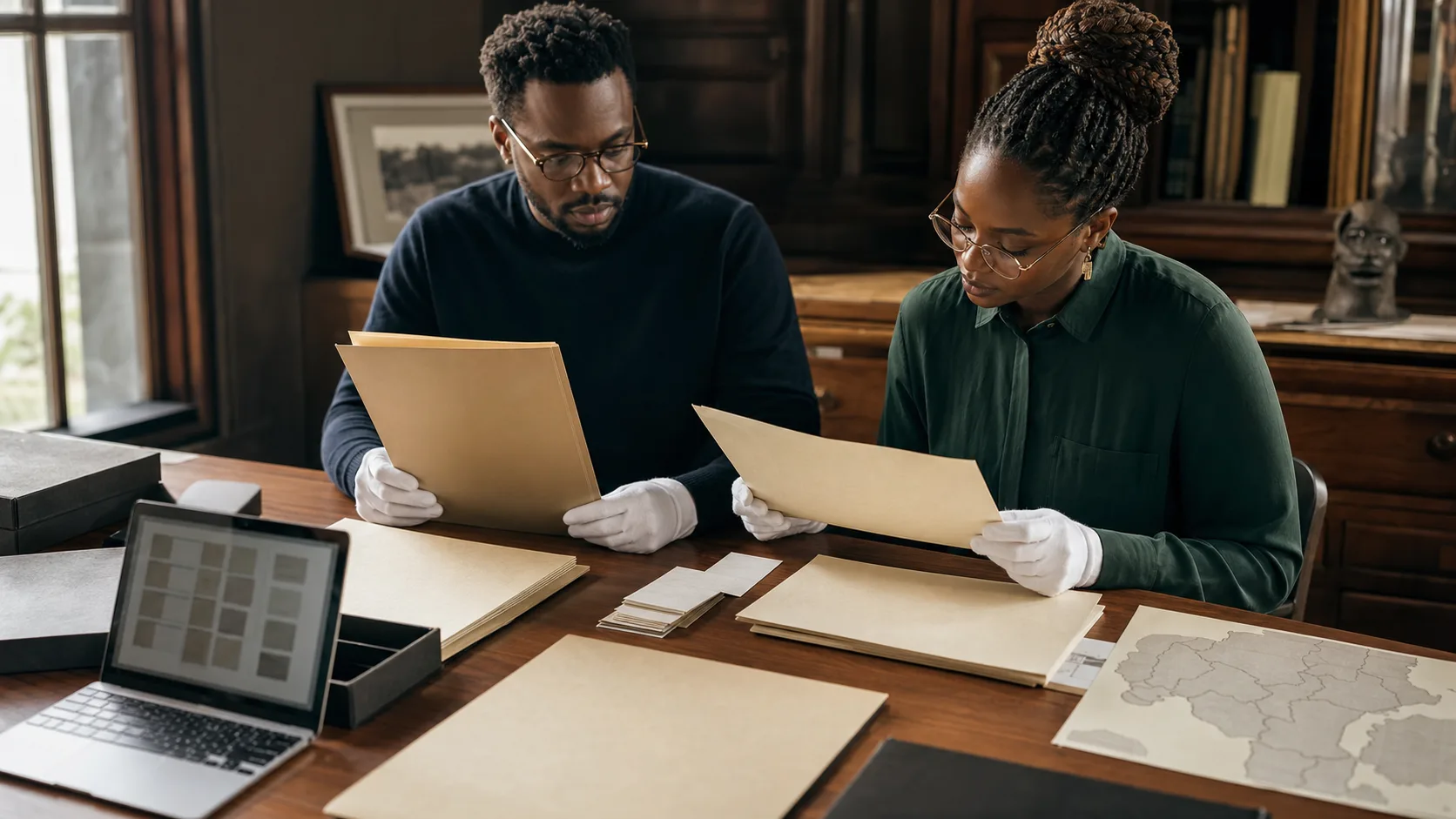
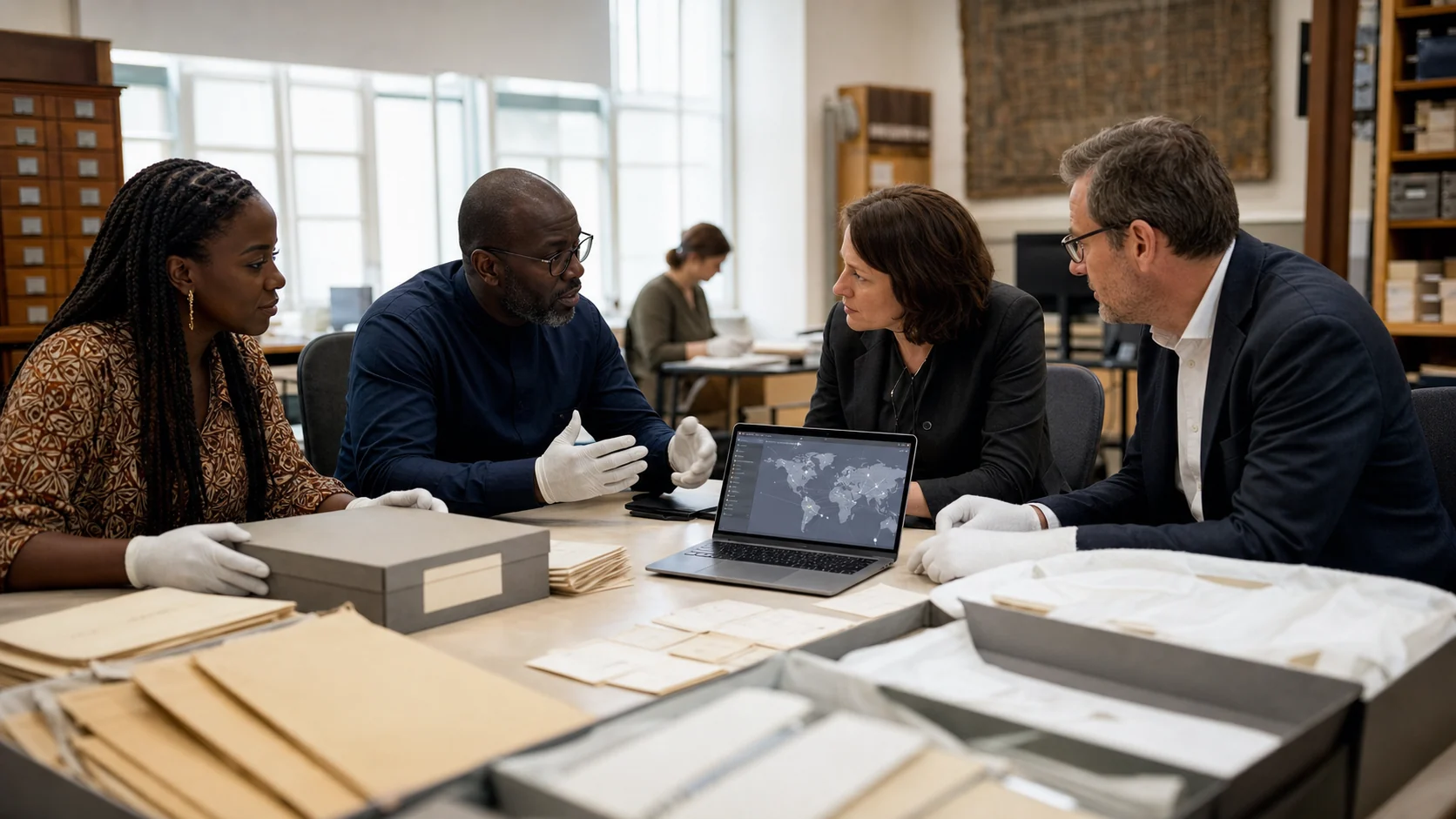
The June 2026 Swiss return to Nigeria is more than another positive restitution headline. It is a useful case study in what provenance research should become when the evidence is strong, the institutions cooperate, and Nigerian authority is treated as the destination rather than a ceremonial afterthought. The Swiss federal announcement says that eighteen artefacts from the Kingdom of Benin were formally received by Nigeria's National Commission for Museums and Monuments at the National Museum in Lagos. Fourteen came from the Ethnographic Museum at the University of Zurich, two from Museum Rietberg Zurich, and two from the Musee d'Ethnographie de Geneve.
The same announcement matters because it separates several actions that public readers often blur. Switzerland returned the eighteen Benin artefacts, also returned five Nigerian artefacts seized in Switzerland through criminal proceedings, signed a cultural-property cooperation agreement with Nigeria, and described future public access in Lagos and Edo State. That is not just a museum story. It is a record of provenance research, legal transfer, cultural diplomacy, anti-trafficking cooperation, storage planning, and Nigerian-led interpretation.
For Reclaim Your DNA readers, the Swiss case gives the campaign a practical benchmark. A serious restitution process should not stop at admitting that objects were taken during the 1897 attack on Benin City. It should publish evidence, name the institutions involved, state who receives authority, explain what will happen to title and custody, disclose any loan arrangements, and show how students, families, researchers and the wider public will learn from the return. That is the provenance standard this article argues for.
Start with the source event: Benin City in 1897
Every provenance standard for the Benin Bronzes has to begin with the same source event. The British Museum's public history describes the Benin Bronzes as works created from at least the 1500s in the West African Kingdom of Benin by specialist guilds serving the royal court of the Oba in Benin City. Its account also states that British forces occupied Benin City in February 1897, looted shrines and compounds, burned the palace, and took thousands of ceremonial and ritual objects. That origin is why later museum transactions cannot be treated as ordinary collecting history.
The Swiss federal release uses the same historical frame in plainer restitution language. It says the returned courtly and religious objects were among the famous Benin Bronzes, looted from the Kingdom of Benin at the end of the nineteenth century. It also states that collaborative provenance research under the Benin Initiative Switzerland showed that the objects were most likely looted during the British attack in 1897 before entering the art market and moving into museums. That sequence is the core evidence chain: court object, colonial attack, looting, art market, museum collection, provenance research, restitution.
A public campaign should insist on that sequence because passive acquisition language weakens memory. An object may have entered a Swiss museum in the twentieth century through a collector, a donor, a dealer or a purchase. Those later records matter, but they do not erase the prior event that made the market route possible. The ethical question is not only whether a museum bought something legally under later local rules. The deeper question is whether museum possession rests on a chain that began with colonial violence against Benin City.
What the Benin Initiative Switzerland changed
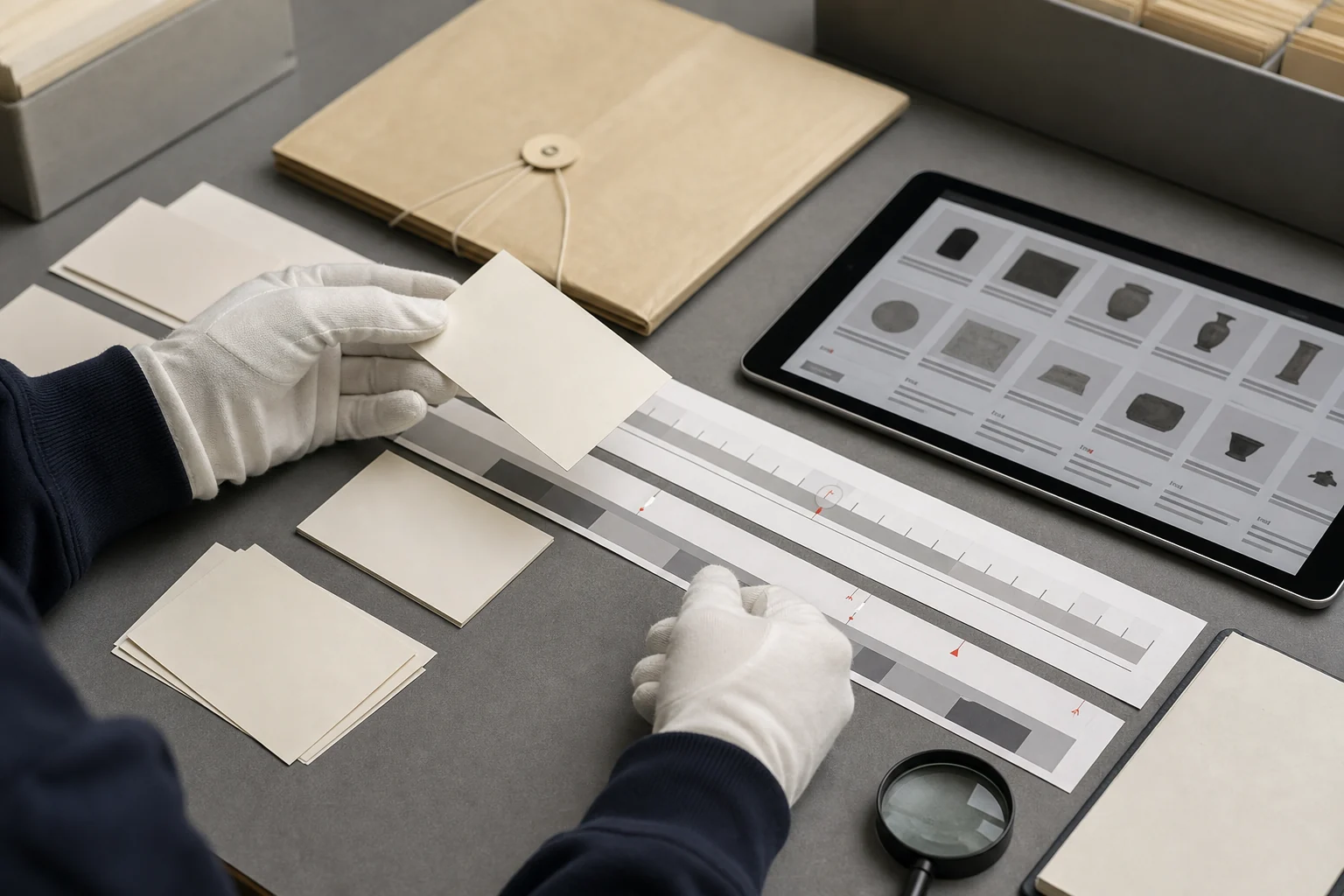
The Benin Initiative Switzerland is important because it joined institutions into a shared research process instead of leaving each museum to produce an isolated statement. According to the Swiss federal announcement, the initiative was launched in 2021, led by Museum Rietberg, involved eight Swiss museums, and worked in close collaboration with Nigerian partners. It was supported by the Swiss Federal Office of Culture and investigated the provenance of Benin artefacts held in Swiss collections. Its findings became the basis for restitution decisions by the University of Zurich, the City of Zurich for Museum Rietberg, and the City of Geneva for MEG.
The University of Zurich gives readers more detail on how that research moved into action. UZH says Nigeria's NCMM filed a formal restitution claim in March 2024 for fourteen Benin artefacts at the university's Ethnographic Museum. UZH decided to honor the claim after provenance research revealed that the majority of the objects had very likely been looted before the university acquired them. It also states that the objects were undergoing comprehensive digitization and would be transferred to the Nigerian National Museum in Lagos for handover to NCMM.
The standard here is not perfection. The standard is traceable institutional responsibility. The Swiss institutions did not say that provenance was too complicated to explain. They described the project, named the participating museums, stated the evidence conclusion, identified Nigerian partners, and connected research to transfer. That is what serious readers should look for whenever an institution announces new provenance work: who researched, what was found, what claim was received, what legal decision followed, and what public record will remain after the ceremony.
Digital Benin turns scattered records into a public research field
Digital Benin remains the strongest public tool for checking whether a restitution announcement sits inside a wider evidence field. Its current platform lets users search, filter and explore data, images and linked research for 5,304 historic Benin objects from 139 institutions in 21 countries. The platform also includes provenance names, maps, archival documents, oral history, Edo designations, Itan Edo cultural history and digital research tools. For a campaign audience, this matters because the 1897 dispersal was not only a loss of objects. It was a fragmentation of records and authority.
The provenance section is especially useful for the Swiss case because it shows how names and roles connect objects across institutions. Digital Benin describes provenance as central to considering objects dispersed across at least 139 institutions because of their ties to the British colonial military campaign on Benin City. It lists roles such as campaign member, dealer, collector, museum, donor, auction house and intermediary. That structure teaches readers to look beyond the final museum holder and ask how an object moved through people, papers and markets.
Swiss provenance work should therefore be read beside Digital Benin, not apart from it. A museum may publish its own object record, but the public needs a connected view that shows whether the same collector, dealer, expedition actor or object group appears elsewhere. Digital Benin is not a replacement for title transfer, physical return or Nigerian museum access. It is the research infrastructure that helps ordinary readers understand why a return is justified and what questions remain after the handover.
Ownership transfer must be stated separately from physical custody
The Swiss announcement is useful because it makes ownership and custody visible as separate facts. It says the transfer of ownership concerned twenty-eight objects in total and was signed on 20 March 2026. It also says nine works will remain in Switzerland on loan at Museum Rietberg and one at MEG. This distinction is essential. A reader should not have to guess whether an object is still owned by a foreign museum, legally Nigerian but temporarily abroad, physically back in Nigeria, or promised for future transfer.
Cambridge provides a comparable example from February 2026. The University of Cambridge announced that it transferred legal ownership of 116 Benin artefacts to Nigeria's NCMM under a management agreement with the Benin Royal Palace. It also stated that physical transfer of most objects would be arranged later, while seventeen pieces would remain on loan and on display at the Museum of Archaeology and Anthropology for an initial three years. The public lesson is the same: title, custody, loan and access are different fields in the record.
A good restitution article, museum label or classroom worksheet should keep those fields separate. Legal title answers who owns. Physical custody answers where the object is. Loan terms answer why it remains somewhere else and who approved that arrangement. Display status answers whether the public can see it. Image and record access answer whether people can study it. When institutions blur these facts, they make accountability harder. When they separate them, they turn restitution into a public record that can be checked.
The cultural-property agreement adds an anti-trafficking layer
The Swiss ceremony also included an agreement between Switzerland and Nigeria on the transfer of cultural property. The federal release says the agreement aims to combat illicit trade in cultural property, facilitate the return of unlawfully exported objects, and strengthen the exchange of information, expertise and best practices. That matters because restitution of historical Benin objects and prevention of future trafficking are connected responsibilities. A state should not return colonial-era heritage while leaving weak systems for newer illicit movement.
UNESCO's return-and-restitution work and ICOM's ethics framework both point toward this broader duty. Cultural property protection depends on documentation, cooperation, professional due diligence and transparent processes. For Benin heritage, that means object records should not sit in museum databases as beautiful isolated images. They should connect to evidence of removal, acquisition routes, legal status, Nigerian authority, image rights, storage plans and public education. The anti-trafficking layer asks whether the institution has systems that would prevent the same opacity from continuing in a new form.
This is also why five additional Nigerian artefacts seized in Switzerland matter, even though they are not the Benin Bronzes at the center of this article. Their return shows that cultural-property policy is not only a question of nineteenth-century history. It is also a present-day enforcement and cooperation problem. A serious campaign should ask both questions at once: what must be repaired from colonial looting, and what systems must change so future Nigerian heritage is not quietly displaced through weak paperwork or market confidence.
Nigerian public access is the measure of repair
Restitution is strongest when the receiving public can see what changed. The Swiss federal announcement states that some returned artefacts will be displayed at the National Museum in Lagos, while the vast majority will return to Edo State for safe temporary storage in the Oba Ovonramwen Storage facility at the National Museum in Benin City. It also says NCMM plans a world-class gallery to display recently returned Benin artefacts, including the Swiss returns, the Netherlands returns and expected Cambridge returns. These are practical access facts, not decorative details.
NCMM's own public note on the 2025 Netherlands return gives the same access issue a Nigerian voice. It describes the 119 returned Benin Bronzes as the largest single collection Nigeria had officially received from the Netherlands, connects them to the 1897 attack on the Benin Royal Palace, and points to Nigerian advocacy, the role of the Oba of Benin, and the development of gallery infrastructure at the Oba Ovonramwen storage facility. For campaign readers, this shows why Nigerian sources belong beside European announcements.
Public access does not mean every object must be immediately displayed, and it does not mean conservation concerns should be ignored. It means the public should know who has authority, where the objects are, what plans exist for display or study, and how records will be updated. Returned heritage can require storage, condition review, conservation work, insurance, security and interpretation planning. Those practical steps should be explained in plain public language because they turn restitution from ceremony into education.
What museums should publish after Swiss-style provenance research
A museum that claims to follow the Swiss standard should publish more than a press release. It should publish an object list, accession numbers, object categories, known acquisition dates, provenance names, dealer or collector routes where known, evidence connecting the object to the 1897 looting, remaining uncertainties, current ownership status, custody status, image license, display status, Nigerian partner contacts and links to Digital Benin where available. If an object remains abroad after title transfer, the loan terms should be explicit.
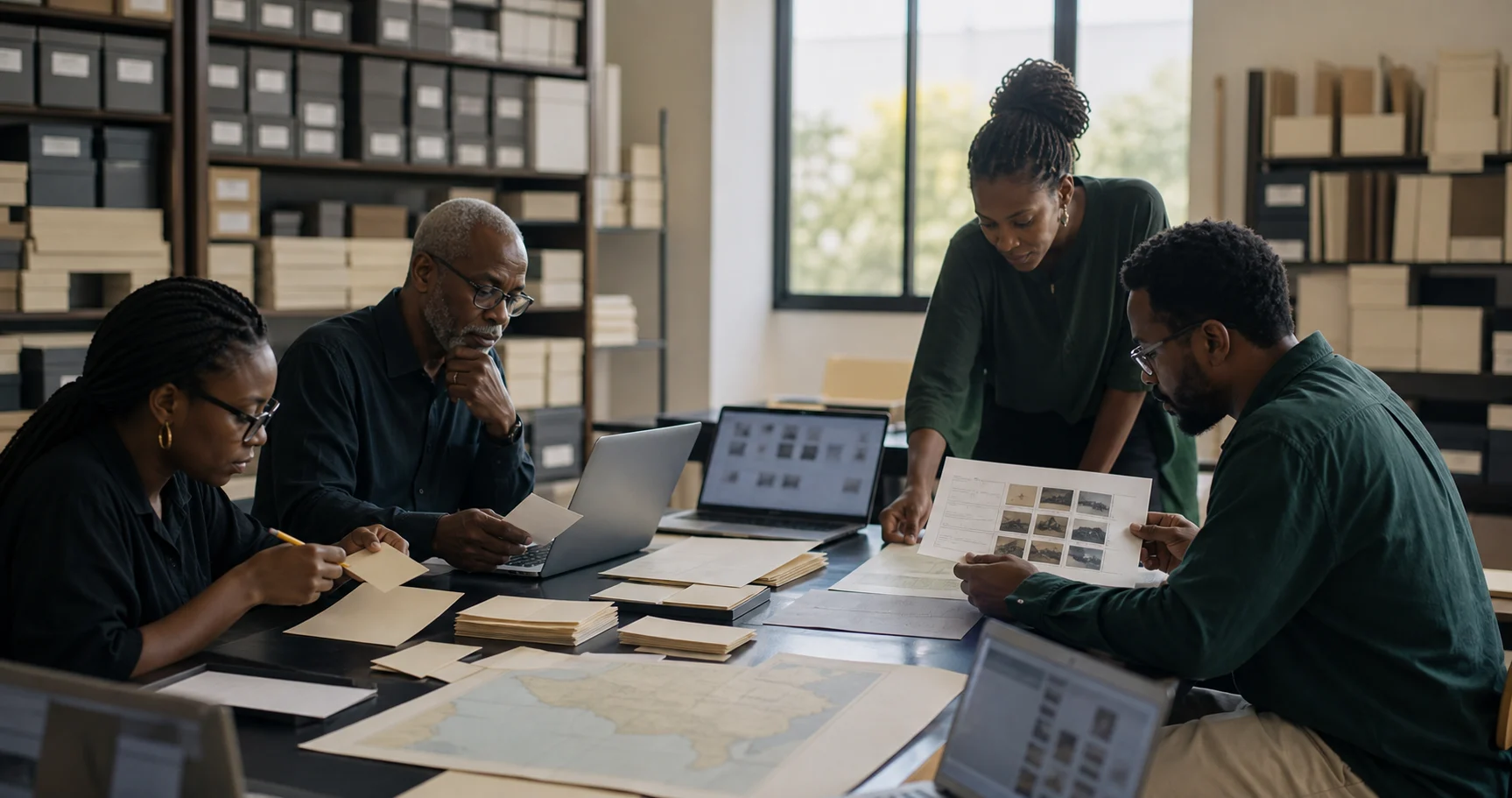
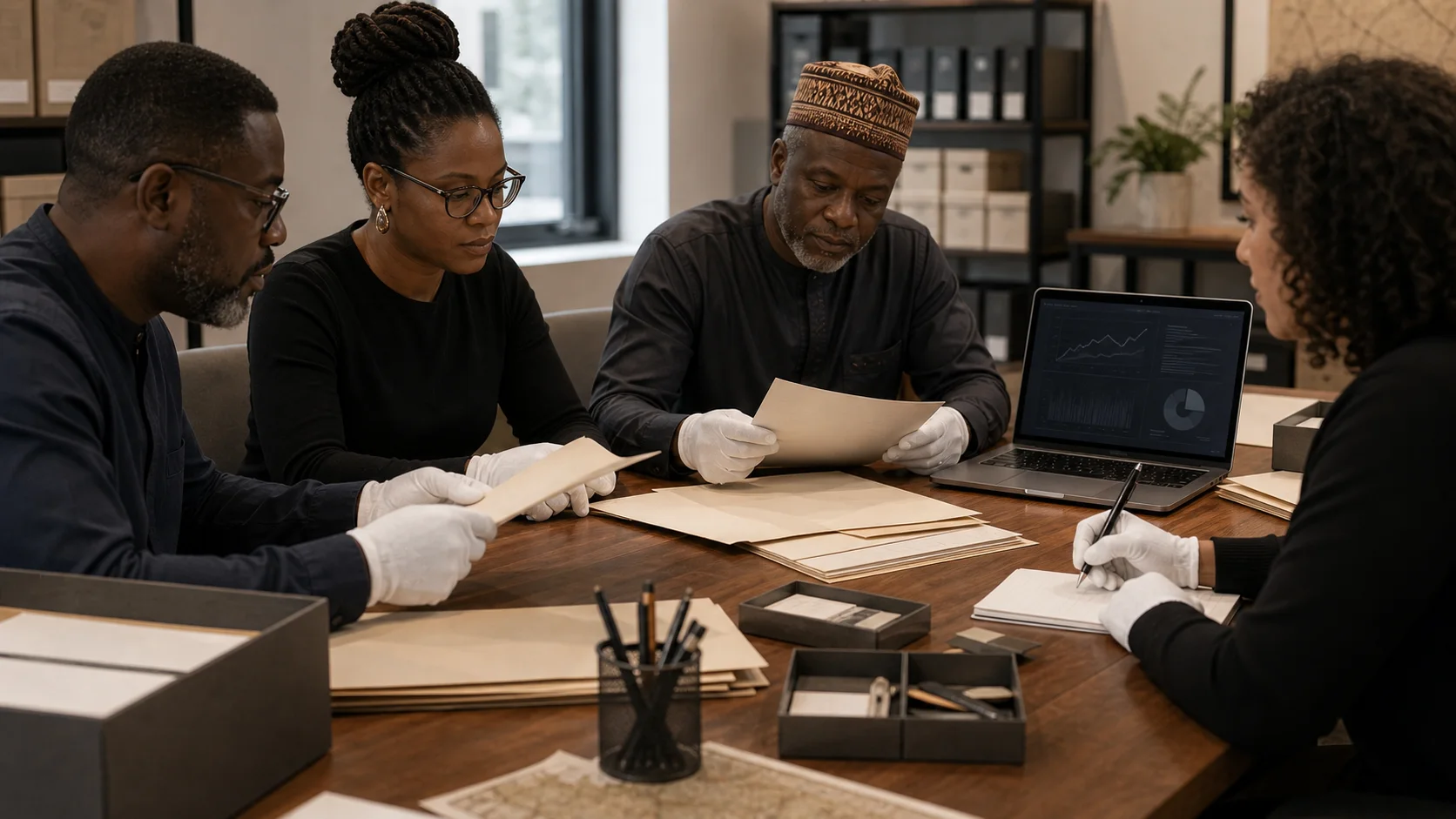
The record should also explain the research process. Which archives were checked? Which staff or independent researchers worked on the project? Were Nigerian partners involved before the final announcement, or only invited to the ceremony? Was the claim initiated by NCMM, by the museum, by a city government, by a federal office, or by a joint project? Were the results public enough for teachers and diaspora groups to verify? A public-facing methodology protects the institution and the source community by making the process inspectable.
This level of detail is not an academic luxury. It is what allows families, students, journalists and campaign supporters to read the public record responsibly. If the article only says that objects were returned, readers cannot tell whether title moved, whether some objects remain on loan, whether object records were updated, or whether Nigerian access improved. The Swiss case gives museums a clear lesson: publish the chain from evidence to authority, not only the photograph from the handover.
How diaspora readers can use the Swiss case
Diaspora action becomes stronger when it is specific. Instead of asking only whether a museum supports restitution, ask whether it has carried out collaborative provenance research, whether the results are public, whether Nigerian institutions have filed or been invited into a formal claim process, whether ownership has transferred, whether any loans are Nigerian-approved, and whether the institution links its records to Digital Benin. These questions are practical enough for public letters, student campaigns, classroom discussions and media interviews.
Readers can also use the Swiss case to avoid two common mistakes. The first mistake is treating every return as complete repair. A transfer may still leave loans, storage questions, record updates, image rights and access planning to monitor. The second mistake is dismissing every partial arrangement as fake. A Nigerian-approved loan after title transfer can be materially different from a museum simply keeping possession. The point is to record the facts precisely, then ask the next question.
A useful exercise is to choose one institution and build a small tracker. Put the institution name in the first column. Add object count, evidence source, 1897 language, claim status, title status, physical location, loan terms, Digital Benin link, Nigerian authority, public access plan and next question. Then compare that row with the Swiss, Cambridge and Netherlands examples. This turns restitution from a vague debate into public literacy that institutions can answer.
Reader takeaways for the next restitution phase
The first takeaway is that provenance research should lead somewhere. Research that confirms a 1897 looting chain should not become permanent delay. It should produce public evidence, Nigerian consultation, ownership decisions, custody planning and updated records. The second takeaway is that collaboration has to be measured. A museum can claim dialogue, but the public should ask whether Nigerian authority shaped the research, the decision and the interpretation after return.
The third takeaway is that legal title, physical return and public access must be tracked separately. This protects readers from both institutional overstatement and campaign confusion. The fourth takeaway is that digital access is powerful when it supports authority, not when it replaces it. Digital Benin gives readers the connected field. Nigerian museums, NCMM updates and Edo public access give the return its living destination. The fifth takeaway is that anti-trafficking cooperation belongs beside historical restitution because both require stronger records.
Reclaim Your DNA should use the Swiss case as a serious campaign model: evidence first, authority clear, access measurable. Read the source releases, compare them with Digital Benin, support the petition, and ask institutions to publish the chain from object record to Nigerian authority. Restitution advances when the public can see not only that something was returned, but why it was returned, who now decides, where it will be cared for, and how Nigerians and the diaspora can learn from it.
Frequently Asked Questions
What is the Swiss Benin Initiative?
It is a provenance-research initiative launched in 2021, led by Museum Rietberg with eight Swiss museums and Nigerian partners, to investigate Benin artefacts in Swiss collections.
How many Benin artefacts did Switzerland return to Nigeria in 2026?
Swiss federal authorities reported that 18 Benin artefacts were formally received by Nigeria's NCMM in Lagos on 29 June 2026, alongside five other Nigerian artefacts seized in Switzerland.
Why does ownership transfer matter if some objects stay abroad on loan?
Ownership transfer recognizes Nigerian authority. A loan after transfer can be a Nigerian-approved display arrangement, but the public record should clearly state the owner, location, loan term and access plan.
How can readers use this case for advocacy?
Compare museum records with Digital Benin and official announcements, ask whether research led to title transfer or public access, and support the Reclaim Your DNA petition with precise source-backed questions.
References and Further Reading
- Swiss Confederation: Swiss museums return 18 major artefacts to Nigeria
- University of Zurich: UZH returns Benin Bronzes to Nigeria
- Digital Benin
- Digital Benin: Catalogue
- Digital Benin: Provenance
- British Museum: Benin Bronzes
- University of Cambridge: legal ownership of 116 Benin artefacts transferred
- NCMM: Netherlands returns 119 Benin Bronzes to Nigeria
- National Commission for Museums and Monuments
- UNESCO: Return and restitution
- ICOM: Code of Ethics